








The bridal bouquet: from superstitious charm to floral work of art
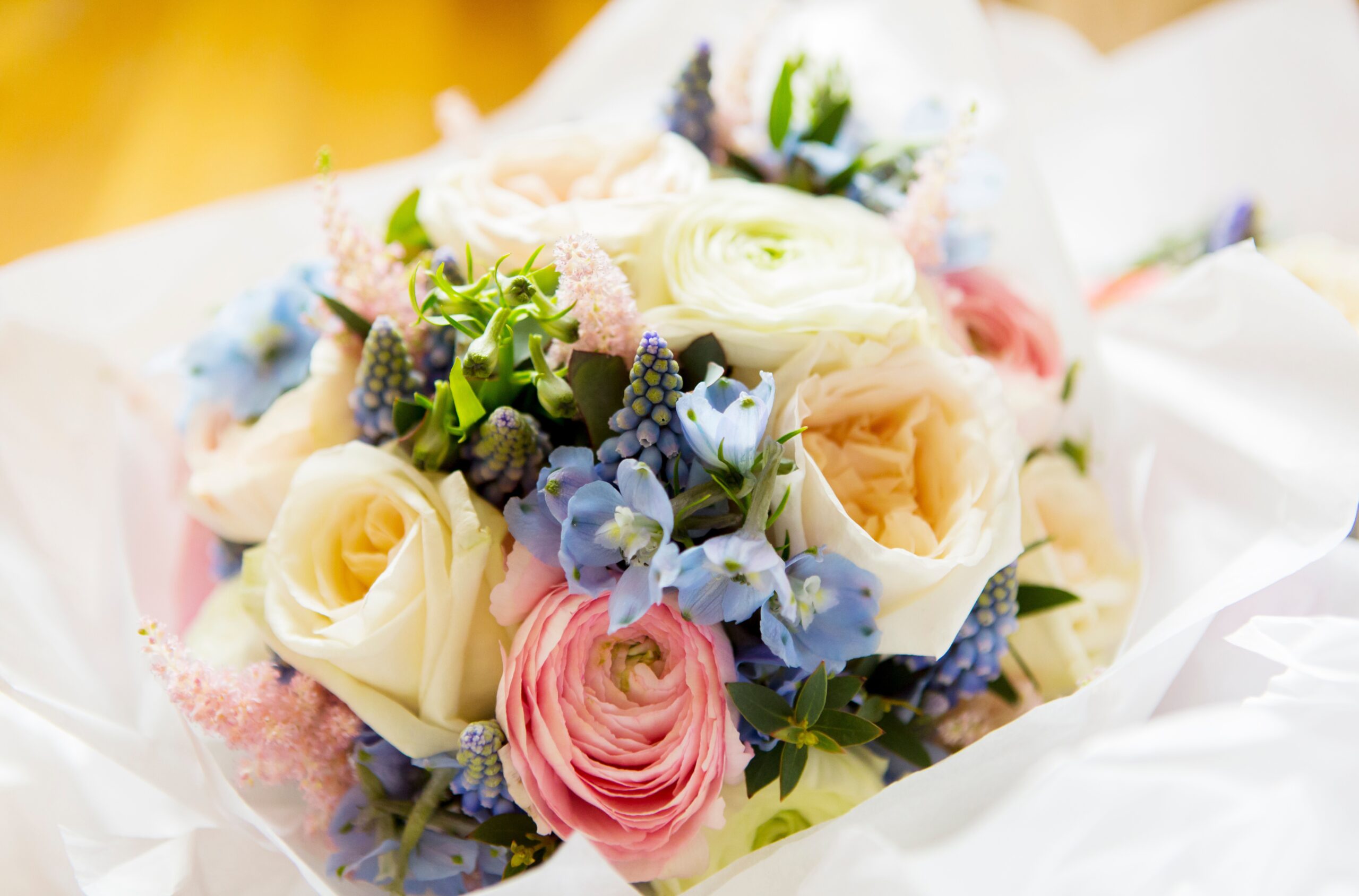
Do you think a bridal bouquet is just a bunch of pretty flowers? Well, get ready to discover everything that lies behind this highly “Instagrammable” accessory: ancient legends, surprising rituals and a good dose of aromas! Silvia Pérez, from Baladre Craft & Creativity, invites us on a fragrant journey that begins in ancient Greece and ends in the floral workshops of the 21st century. An article full of curiosities, anecdotes and, above all, lots of flowers!
When we think of a wedding, one of the most iconic elements that comes to mind is the bridal bouquet. This beautiful floral arrangement not only adds a touch of elegance and colour to the event, but also has a rich and fascinating history dating back thousands of years. In this post, we’ll explore the origin of the bridal bouquet, its evolution over time, its meaning in different cultures, and how current trends have given rise to new ways of designing bouquets, from preserved flowers to the option of creating a unique bouquet in a botanical workshop. Get ready to see bridal bouquets like never before!
The first bouquets: protection against the invisible
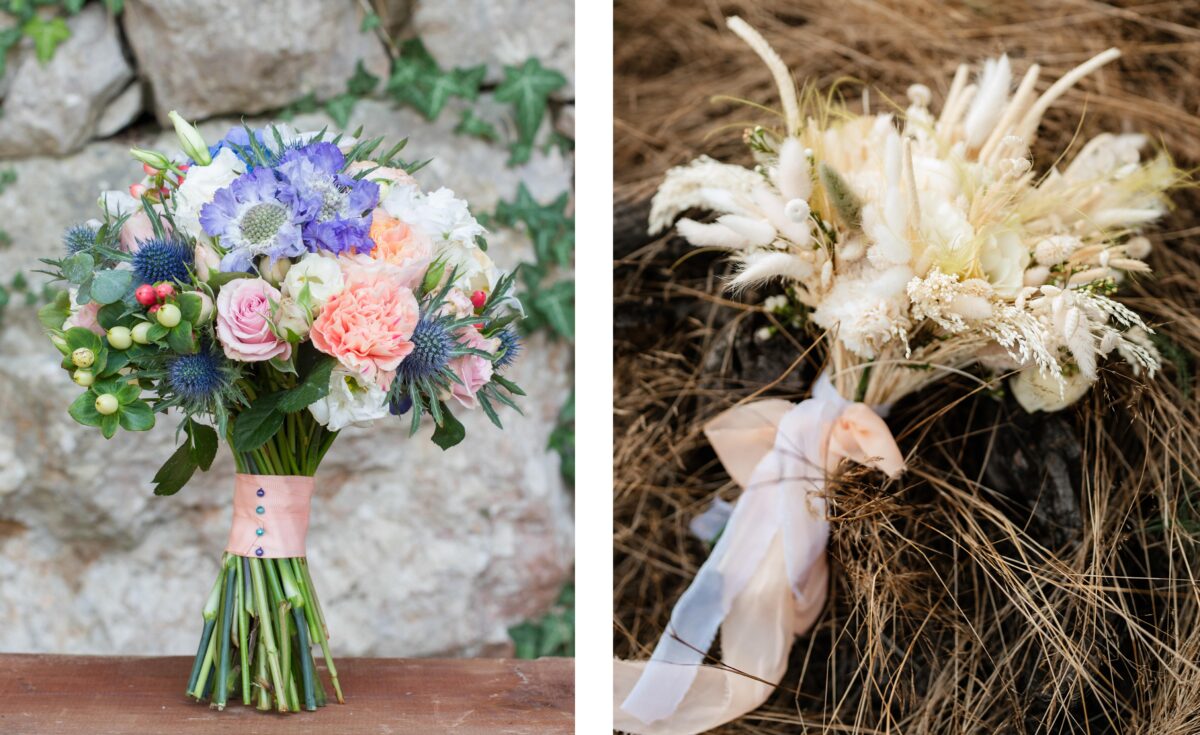
The origin of the bridal bouquet is shrouded in myths and legends. In ancient times, brides didn’t carry bouquets of flowers as we know them today. Instead, they carried bouquets of aromatic herbs and spices, such as garlic, dill and thyme. These ingredients were not only known for their medicinal properties, but were also believed to have the ability to ward off evil spirits and protect the couple from bad luck. This practice was common in various cultures, including ancient Greece and Rome. In ancient Greece, brides wore crowns of herbs and flowers on their heads, symbolising fertility and prosperity. Similarly, in Rome, garlic was an essential ingredient in bridal bouquets, as it was believed to ward off evil spirits and ensure a prosperous marriage.
At that point in history, brides used plants with specific meanings: garlic (Allium sativum) not only ward off evil spirits, but was also believed to protect against disease; dill (Anethum graveolens) was considered a symbol of fertility and abundance; thyme (Thymus vulgaris) was associated with courage and good fortune; and rosemary (Salvia rosmarinus) was related to memory and eternal love. In addition, these plants not only had spiritual symbolism, but also provided a strong aroma that helped to mask less pleasant odours (remember that hygiene in ancient times wasn’t the same as it’s now).
Flowers to the rescue: from mystical symbolism to romantic expression
As time went by, the idea of getting married smelling of garlic and spices gave way to a more refined option: flowers. During the Middle Ages, aromatic herbs continued to be present in ceremonies, but wild flowers began to appear, marking the beginning of the evolution of the bridal bouquet as we know it today. Brides in Europe began to include flowers in their bouquets, as flowers not only had a pleasant aroma, but also represented new beginnings, love and happiness. This change reflected a cultural transition, where the symbolism of protection against evil spirits gave way to the celebration of love and beauty.
Each flower had a specific meaning, a tradition that, spoiler alert!, would evolve into floriography (or the language of flowers). Some of the most popular flowers in medieval and Renaissance bouquets were: roses (Rosa spp.), which are the universal symbol of love and passion, recognised for their intoxicating aroma and velvety petals; lily of the valley (Convallaria majalis), which represented purity and humility and is also a flower native to European forests; and lavender (Lavandula angustifolia), which was used not only for its relaxing scent and calming properties, but also because it was believed to attract good luck.
At this time, bridal bouquets were also considered fertility charms. Certain flowers, such as ivy (Hedera helix), were added for their ability to climb and cling to their surroundings, symbolising strong and lasting love.
From mystical symbolism to floral romanticism
The Renaissance brought about a significant change in weddings, especially among the aristocracy and high society. As weddings evolved from a simple ritual to unite families into opulent events laden with symbolism, the bridal bouquet began to take on a more aesthetic and decorative function.
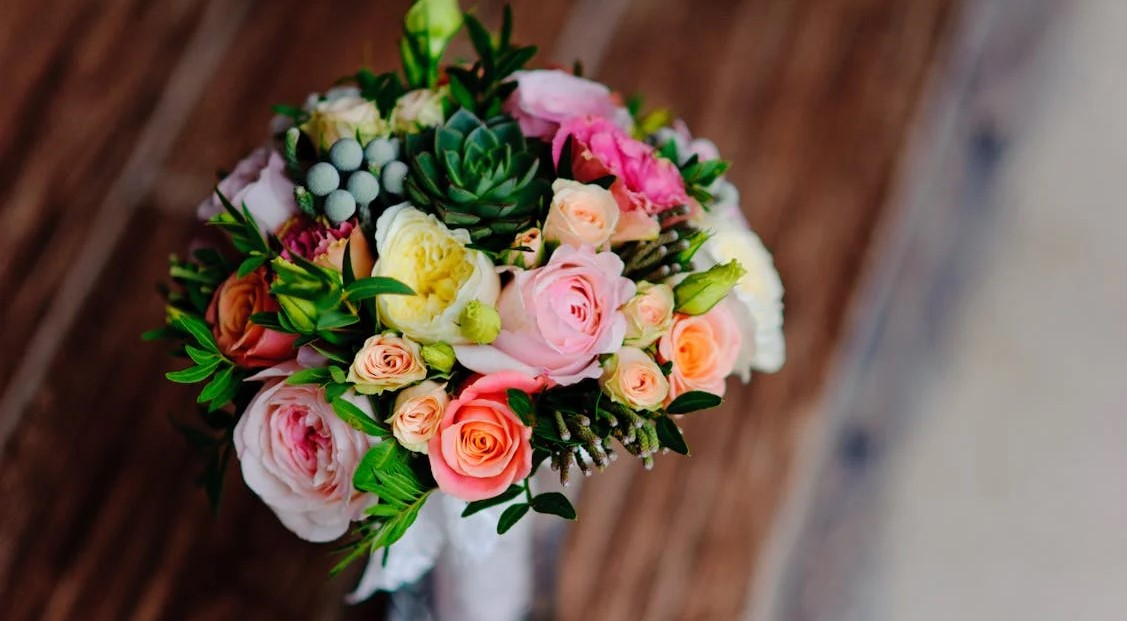
Although bouquets still had a strong mystical and religious component in the Middle Ages, during the Renaissance they became a symbol of social status and refinement. It wasn’t enough for the bride to carry flowers; her bouquet had to be a piece that reflected her family’s wealth and connection to the art and culture of the time. Therefore, bridal bouquets were composed of exotic and expensive flowers that displayed the family’s status and wealth. In addition, bridal bouquets began to be decorated with silk ribbons, hand-embroidered lace and even jewels encrusted among the flowers. The incorporation of these elements wasn’t only an aesthetic whim, but also a demonstration of power and wealth. The more elaborated and ostentatious the bouquet, the greater the prestige of the bride’s family.
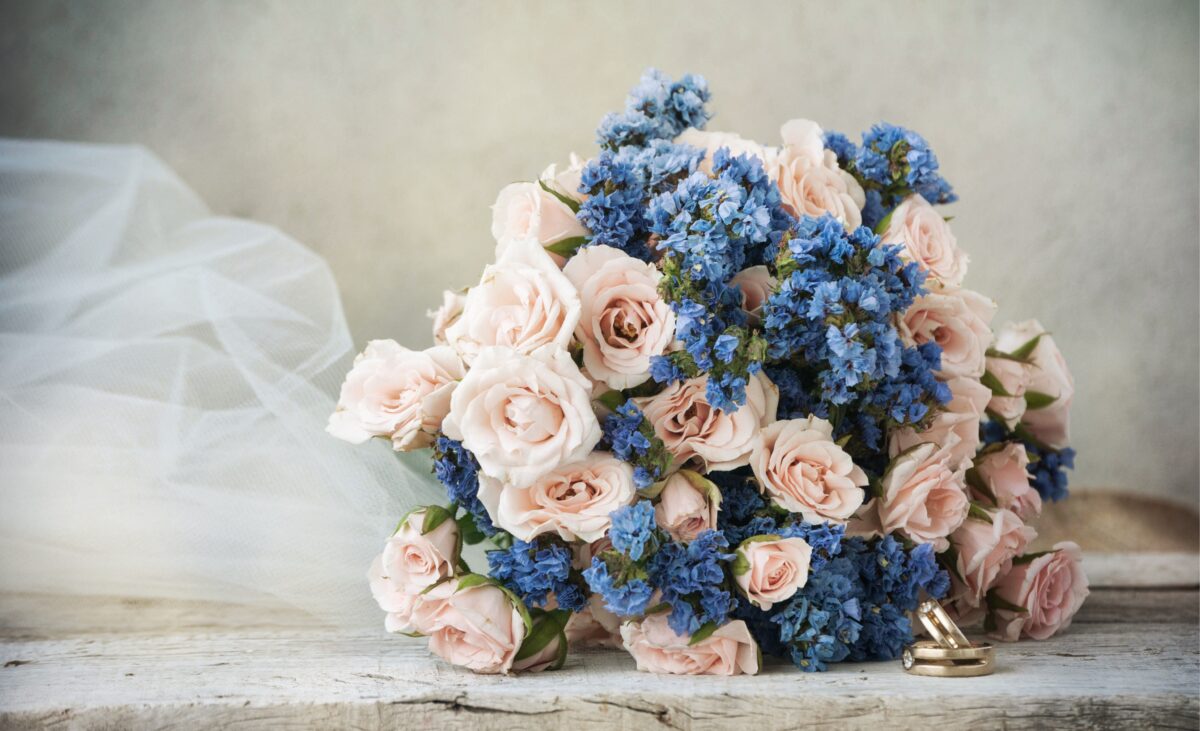
The Renaissance was a period when botany began to be studied in greater depth, and trade with the East and America allowed the arrival of exotic flowers that had never before been seen in Europe. Some of the most popular flowers in bridal bouquets at the time were: tulips (Tulipa spp.), introduced from the Ottoman Empire, which became a real obsession in the Netherlands, even giving rise to the famous ‘tulip mania’; orchids (Orchidaceae): a symbol of exotic beauty, they were extremely rare and expensive, so only the wealthiest families could afford to include them in bouquets; peonies (Paeonia spp.), known in China for centuries, which began to be cultivated in European gardens and were associated with good fortune and prosperity; and Iris (Iris germanica), highly prized in France, especially at the court of the Valois kings, as the iris was the royal emblem of the French monarchy.
Furthermore, at a time when perfumes were still a luxury reserved for the few, bridal bouquets also had an aromatic function. Flowers with intense fragrances were selected so that the bride would give off a pleasant scent during the ceremony. The flowers most commonly used for their perfume were: Damask roses (Rosa damascena), with their sweet, intense aroma, which were a symbol of love and romance; orange blossom (Citrus sinensis), which with its fresh, delicate and cheerful fragrance represented purity and fertility; and lavender (Lavandula angustifolia), with its relaxing and fresh aroma, which was associated with peace and tranquillity in married life.
On the other hand, the meaning of flowers continued to be important. At the French court, brides carefully selected flowers so that each bouquet would tell a story and convey a message. This practice was known as the ‘language of flowers’ or floriography, and it allowed brides to express their feelings and desires through their bouquets.
Baroque and Rococo: exaggeration as the norm
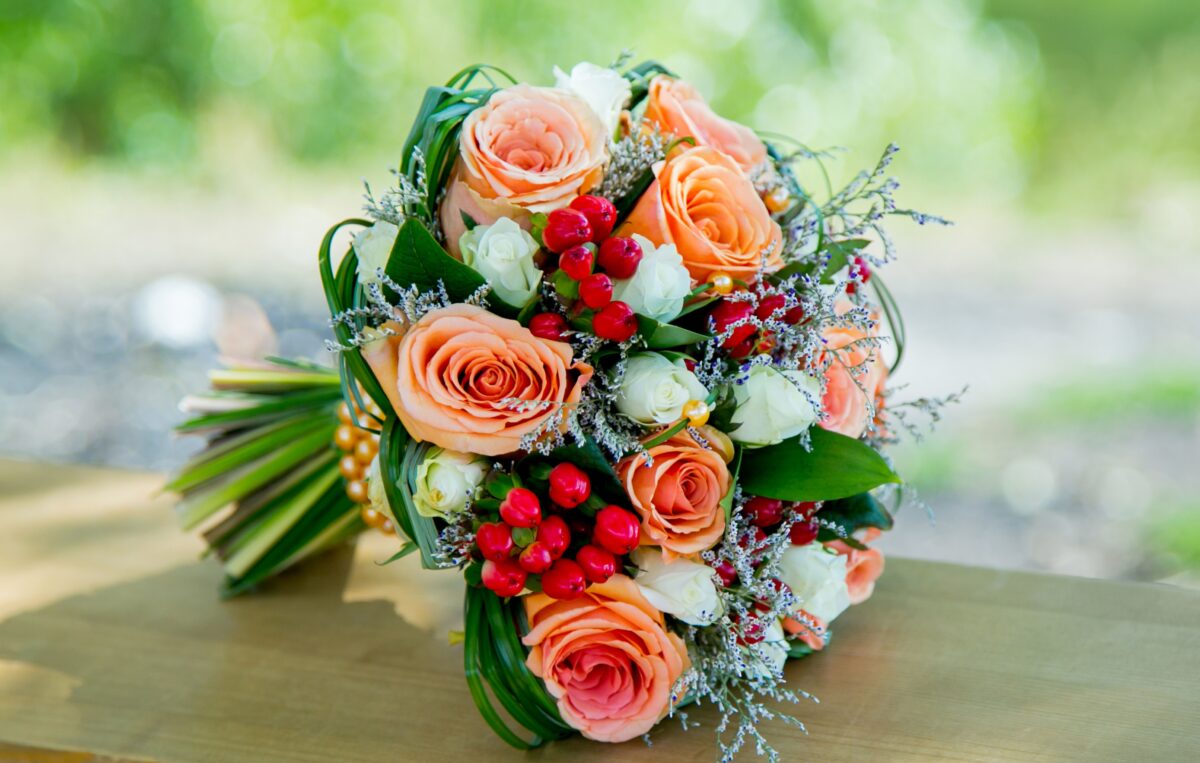
If bridal bouquets were already ostentatious during the Renaissance, they reached even greater levels of extravagance during the Baroque and Rococo periods (17th and 18th centuries). At this time, everything had to be magnificent and ornate, and bouquets were no exception. During this time, bridal bouquets became larger and more voluminous, with ornate shapes and flowers arranged in an almost sculptural way. Unlike today’s bouquets, which look for natural harmony, Baroque bouquets were true artistic compositions, with very distinct shapes and vibrant colours.
The use of dried and preserved flowers became popular, allowing the bouquet to be kept as a lasting memory of the marriage for years to come. In addition, brides began to carry small fan-shaped bouquets that could be folded and opened depending on the occasion. Floral arrangements weren’t only used by the bride, but also by bridesmaids and high society guests, who wore small replicas on their outfits as a symbol of elegance and sophistication.
From floral art to 19th-century romanticism
As Europe entered the 19th century, bridal bouquets began to move away from the excesses of the Baroque period and adopted a more romantic and intimate style. In the Victorian era, flowers were no longer just a symbol of status, but took on personal and emotional significance. In 1840, Queen Victoria of England, who married Prince Albert, carried a bouquet of orange blossoms (Citrus sinensis), symbolising purity and fertility. This event set a trend, and brides in the Victorian era began to use bouquets of flowers with deep and personal meanings. This gave rise to floriography, a language in which each flower conveyed a message.
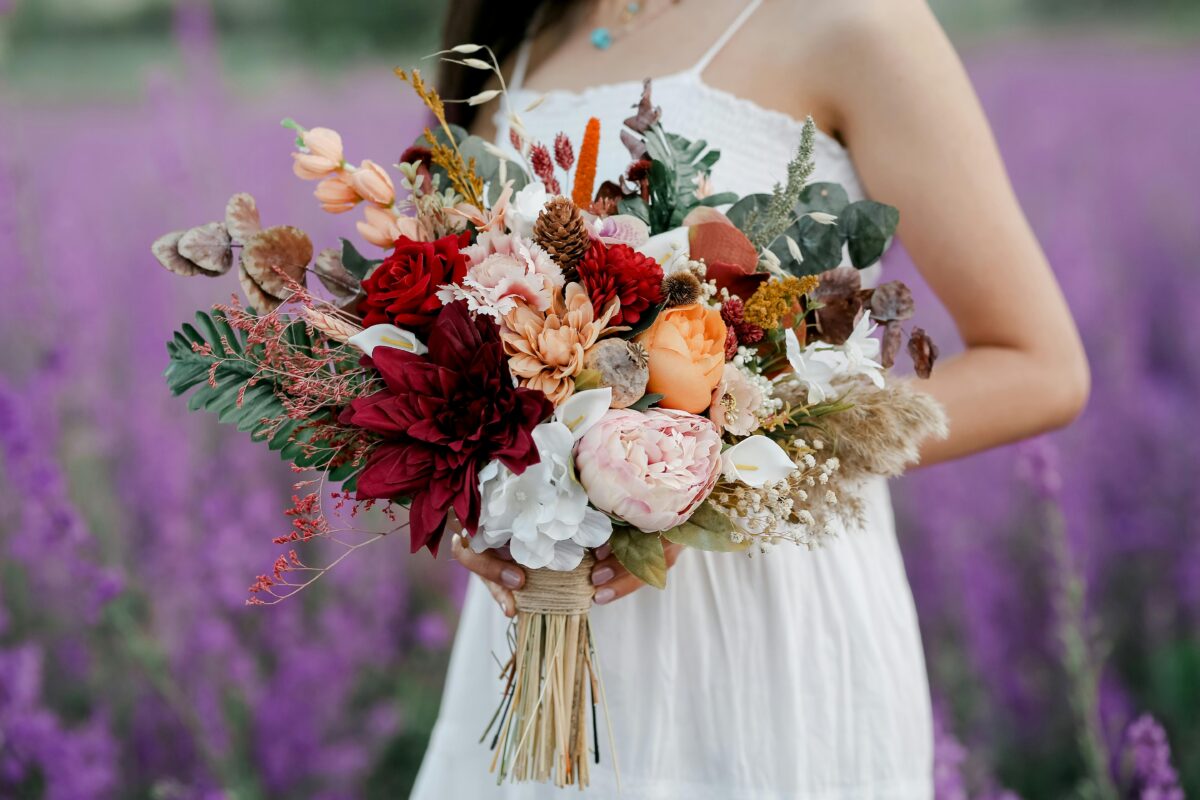
Floriography reached its peak, and from then on, brides used floriography books to select the flowers that best represented their feelings and desires for marriage. Thus, bouquets became a kind of secret letter in which each flower had a specific meaning, representing feelings and hinting at desires for marriage. This trend marked the beginning of a new way of understanding the bridal bouquet: no longer just as a decoration or amulet, but as a message full of emotions and personal memories. Some of the most popular flowers were: violets (Viola odorata), symbolising fidelity and modesty; camellias (Camellia japonica), representing admiration and desire; and daisies (Bellis perennis), symbolising innocence and purity.
The 20th century: from extravagance to naturalness
With the arrival of the 20th century, bridal bouquets continued to evolve. Advances in transport and communication made exotic flowers more accessible, allowing brides to experiment with a wider variety of flowers and styles. As trends changed, bridal bouquets also adapted.
In the 1920s and 1930s, long, elegant cascading bouquets featuring lilies (Lilium spp.) and gardenias (Gardenia jasminoides) became fashionable, reflecting the glamour of the era. In the 1950s, the influence of Hollywood brought more structured and compact bouquets, featuring roses (Rosa spp.) and carnations (Dianthus caryophyllus). During the 1960s and 1970s, with the rise of the hippie movement, bouquets became smaller and simpler, reflecting a more minimalist and natural approach. Wildflowers and loose, asymmetrical, carefree arrangements gained popularity, capturing the spirit of the era. The 1980s brought huge bouquets with frills and ribbons, reflecting the exaggeration of the fashion of the time. Striking flowers such as oriental lilies (Lilium spp.), brightly coloured roses (Rosa spp.) and gypsophila (Gypsophila paniculata), ideal for adding volume, were used. During the 1990s, bouquets became more romantic and compact, featuring peonies (Paeonia spp.) and tulips (Tulipa spp.) in pastel shades. Trends began to shift towards a more classic and romantic style, with bouquets becoming more rounded and delicate, inspired by minimalist elegance.
The 21st century: the rise of sustainability and personalisation
From the dawn of the new millennium to the present day, bridal bouquets have become as varied as the brides themselves. From traditional, elegant bouquets to modern, avant-garde arrangements, brides can choose from a wide range of styles, flowers and colours to create a bouquet that reflects their personality and tastes. The symbolism of flowers remains important, and many brides select flowers that have special meaning to them. In addition, sustainability and environmental responsibility are increasingly important considerations. Today’s brides often choose seasonal and local flowers, as well as sustainable growing practices. This trend not only reduces environmental impact, but also supports local growers and ensures fresh, beautiful flowers for the great day.
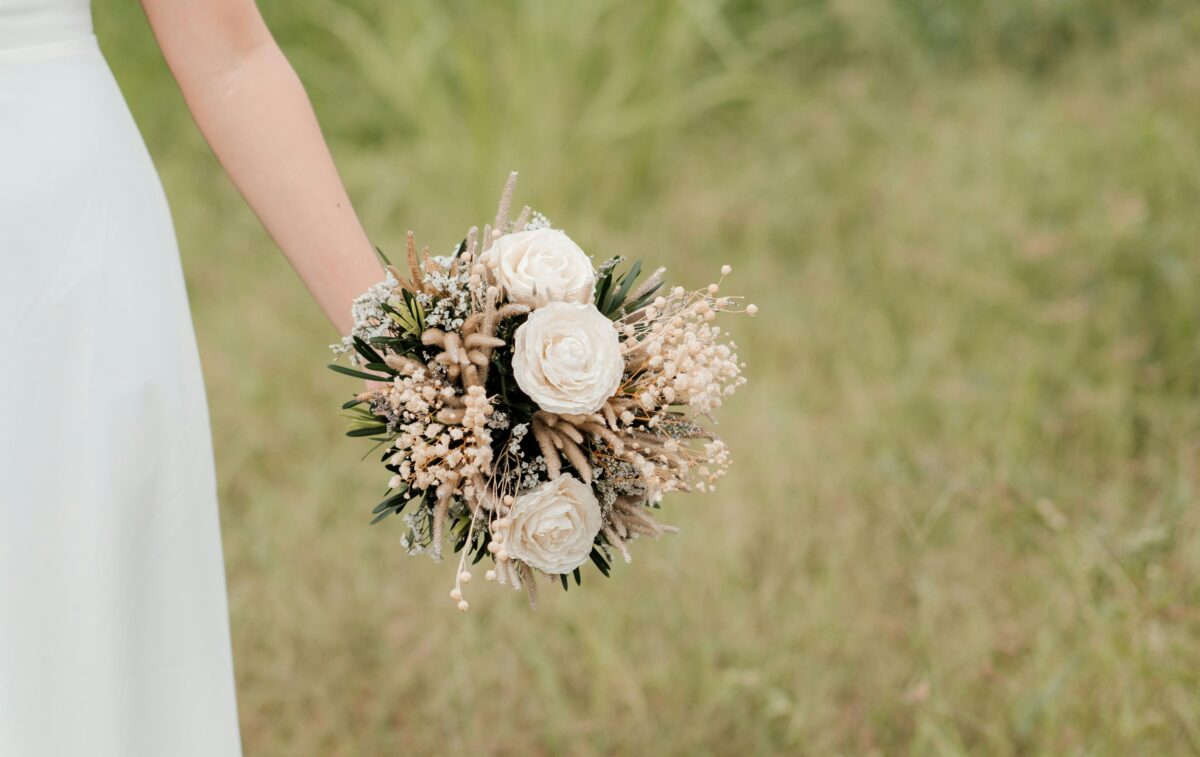
With growing environmental awareness, bridal bouquets have evolved towards more sustainable options, among which preserved flowers stand out. Among the most commonly used are eucalyptus (Eucalyptus spp.), which adds freshness and texture; hydrangeas (Hydrangea spp.), highly valued for their volume; preserved roses (Rosa spp.), which remain perfect for years; and lavender (Lavandula angustifolia), prized for its aroma and rustic charm. In addition to being an eco-friendly option, these bouquets allow you to preserve a lasting memory of your great day. They have become a popular alternative for those who want to avoid wasting flowers and are looking for a more sustainable and personalised option.
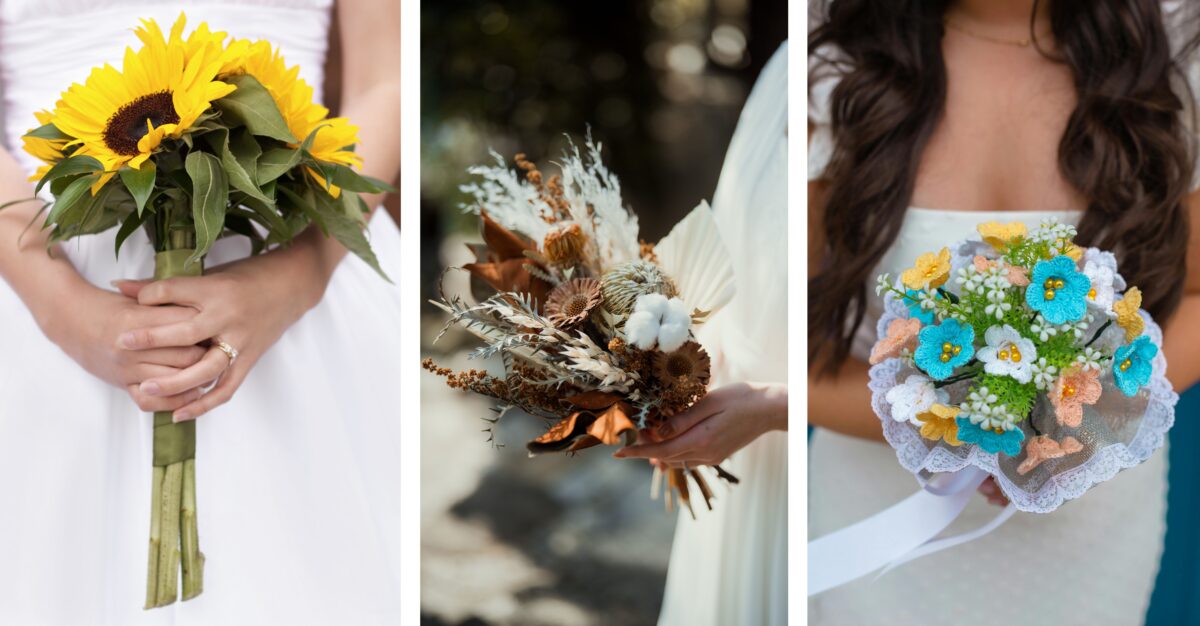
Another current and recent trend is botanical workshops where brides can design and make their own bouquets. These workshops allow participants to experiment with floral arrangement techniques, fresh, dried and preserved flowers, and floral aromatherapy to enhance the meaning of the bouquet. Not only do these workshops allow brides to create a unique bouquet, but they also foster a connection with nature and creativity. Some couples even choose to do these workshops together as a way to symbolise their union before marriage.
Conclusion: a bouquet, a living history
From the days when garlic and thyme protected brides to the era of preserved flowers and botanical workshops, the bridal bouquet has evolved without losing its essence.
Today, beyond tradition, each bouquet reflects the personality and values of the person carrying it, combining aesthetics, symbolism and sustainability. In short, the bridal bouquet is not just an accessory, but a living testimony to history, botany and the relationship between humanity and flowers.