




Botanist of the Month: José Reig
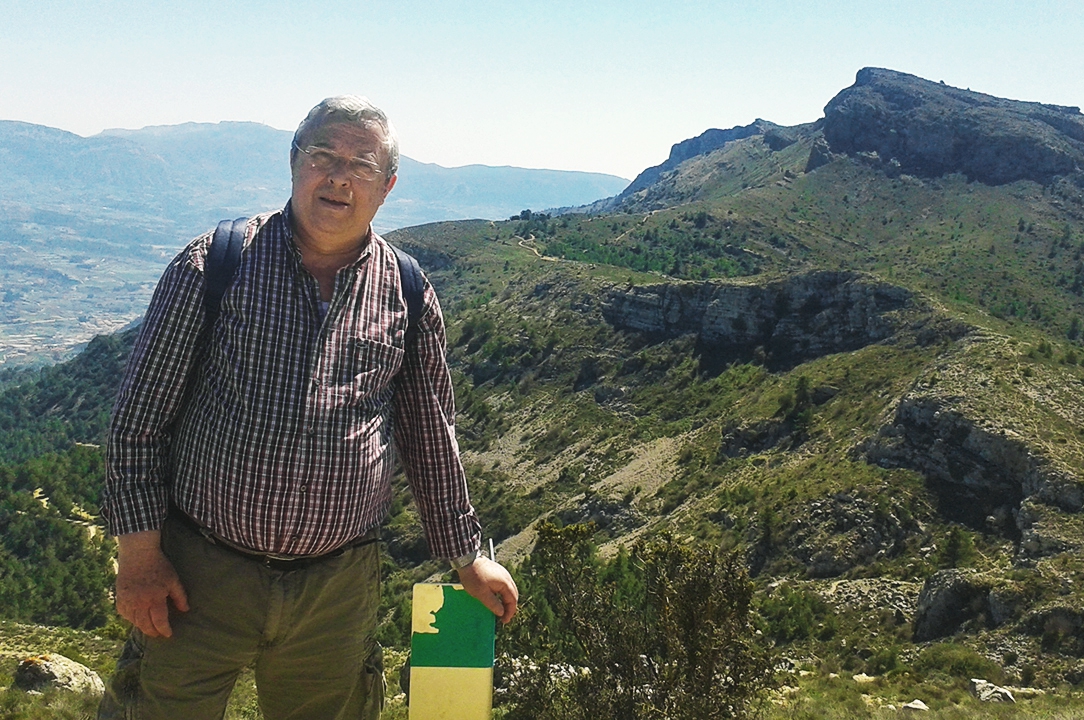
‘Botany is learned and loved in the field and in the laboratory.’ José Reig, a researcher linked to the Jardí Botànic, recalls that his relationship with the plant world goes back to his childhood, in Cocentaina. A researcher in plant histology and microscopy, he also dedicates himself to training future science teachers. Botany and Biology Didactics, two fields, he assures us, that need patience, perseverance and study as ingredients. And good mood. In this interview, he shares his professional career and the research projects he is currently working on.
What attracted you to Botany?
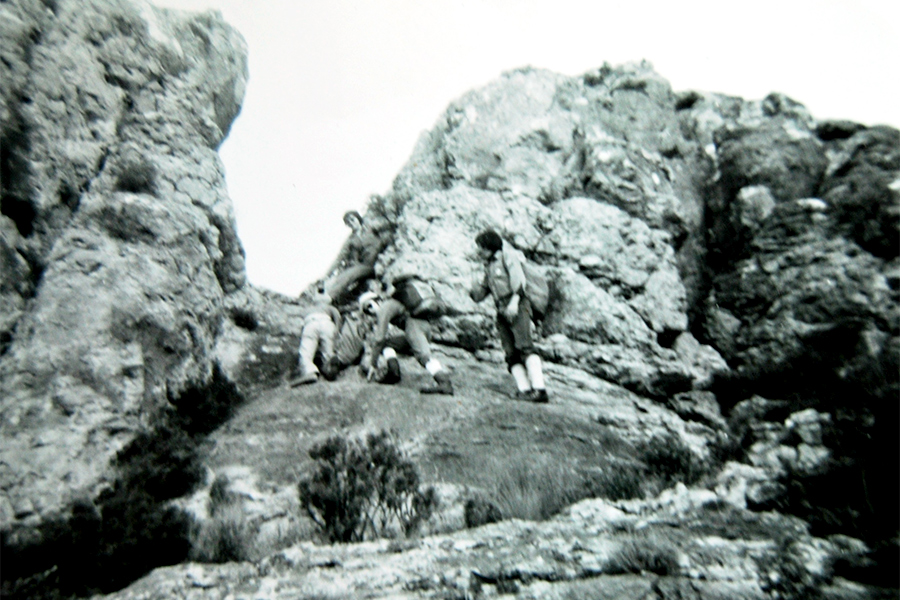
From a young age, I felt very attracted to the world of plants; perhaps being born in Cocentaina, which meant living linked to the Mariola and collecting aromatic plants with my grandfather and friends, already marked me. Subsequently, when studying for my degree in Biology, the heavy botanical load in the 2nd and 3rd years, the herbaria, the frequent excursions… led me to present myself as an internal student of botany to help the practical class lecturers. The practicals were held at the Jardí Botànic and having to attend three afternoons a week increased my attraction to the discipline even more. And later, I did my doctoral thesis on plant histology with the late Julio Iranzo and with Ana Ibars. That is, my link with the plant world has been since childhood and has continued through my youth and the rest of my life.
Could you summarise your professional career?
As I have already mentioned, I studied for my degree in Biology at the University of Valencia and, when finishing, I took the state exam for Secondary School Assistant Teacher and subsequently became a Secondary School Professor. I’ve been linked to botany especially in matters related to plant anatomy and microscopy, and I received training from Julio Iranzo. I did my doctoral thesis on the ontogeny of flowers of the Cistaceae of the Iberian Peninsula.
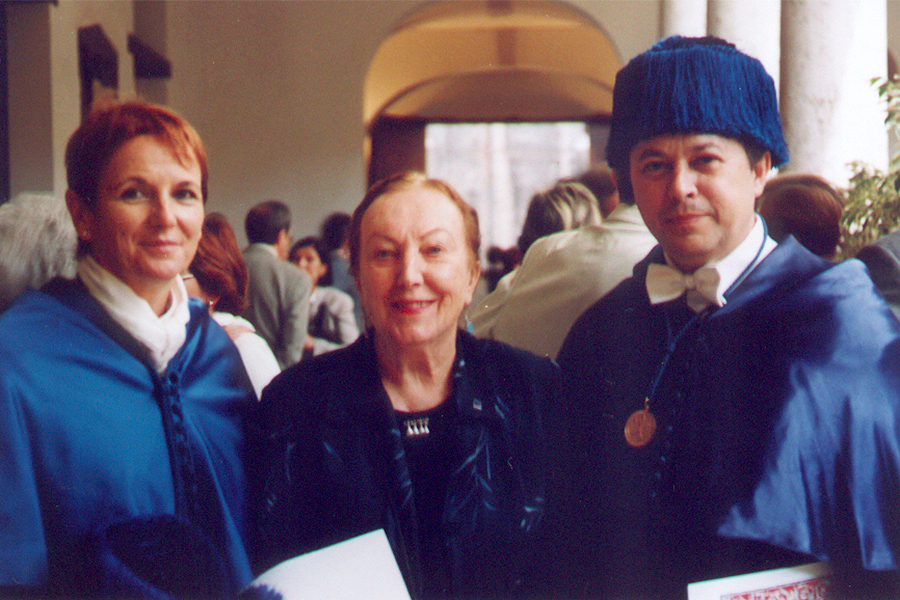
My research career is linked to the Jardí Botànic since the opening of the research building. We’ve focused on floral histology, on the action of tropospheric ozone and other environmental pollutants on plants, on lichen microscopy (with the team coordinated by Dr Barreno). We’ve also worked on Phytophthora infection in different plants of forestry interest. We’ve published more than 40 articles in international journals on these topics and supervised doctoral theses and numerous final degree and final year projects.
Currently, in collaboration with a team from the Polytechnic University of Valencia, we’re studying the flowering process and development of pollen tubes in citrus fruits to try to prevent the formation of seeds in their fruits.
I speak in the plural because, almost from the beginning, the work of our laboratory has been carried out with Dr Francisco García Breijo, with whom I share a great friendship. Without him, many of our projects and publications wouldn’t have been possible.
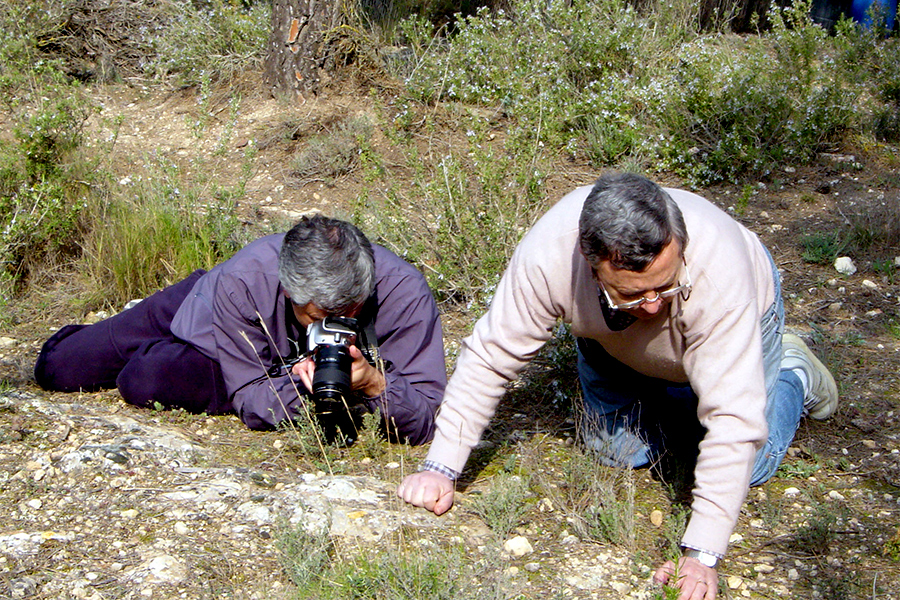
A long-lasting relationship with the Jardí Botànic of the University of Valencia.
In the second year of my degree I began the relationship, as an internal botany student with Professor Mansanet and, with some periods of lesser presence due to work destinations outside Valencia, I’ve continued my link, increasingly intense, until today.
As an indelible fact and memory, I must say that I gave my girlfriend, now my wife, her first kiss in the Jardí Botànic. The bench that witnessed that moment is still there and when I pass by it the memory moves me.
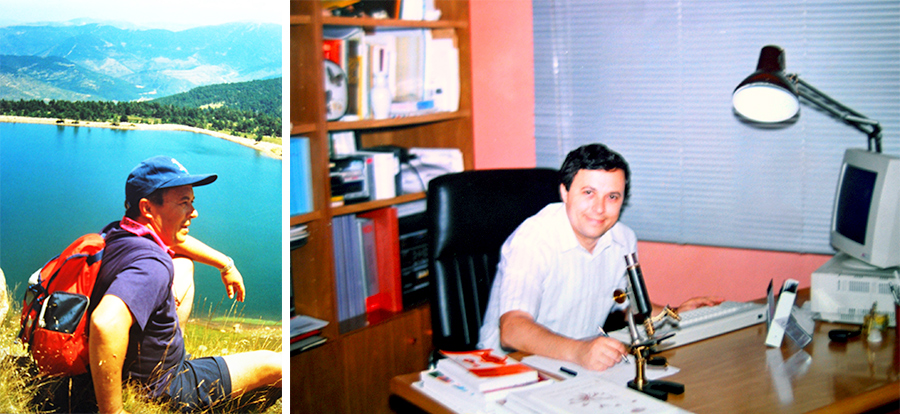
Do you think your work has changed over time?
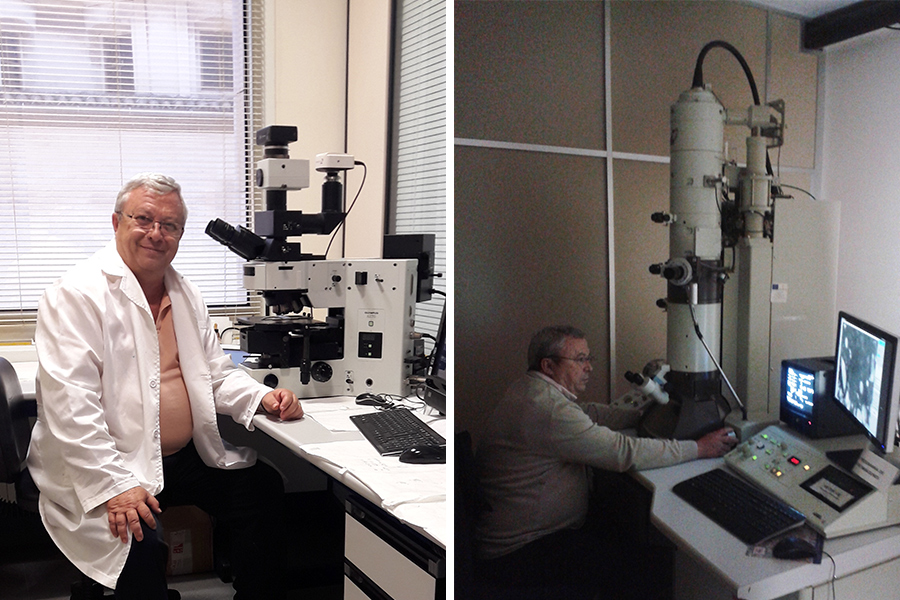
Practically it hasn’t changed at all. It has always been the field of optical and electron microscopy that has kept me busy. Obviously, within this field there has been dedication to various aspects: floral ontogeny and development processes; action of atmospheric pollutants on plants at a microscopic level; microscopic structure of lichen thalli and lichen algae. In this field, it should be noted that our team discovered the presence of several species of algae in the same lichen, breaking a paradigm that existed: ‘a lichen is a union of an alga, a fungus and, sometimes, a cyanobacterium’. The discovery has allowed the scientific community to approach lichens to study them as a model of multisymbiosis processes, as models of evolution by symbiosis, as models of multispecific union for physiological complementation…
We’ve trained in new microscopy techniques: confocal, detection of chemical elements in cellular organelles through electron microscopy, cryoscanning… which has allowed us to tackle new fields and obtain more information in addition to what histochemistry gives us. Currently, in addition to the previous fields, we study the development of pollen tubes and their union to the stigmas of the flower.
Obviously, there have been changes in the Jardí Botànic, its 4 directors, a multitude of colleagues and collaborators who have passed through and are no longer here… All have contributed and helped the fact that my interest in botany continues to grow. A special memory is deserved by Professor Manuel Costa (from whom I’ve learnt so much), Ana Ibars, Julio Iranzo, David Lázaro… Many and very good fellows in hardships and joys.
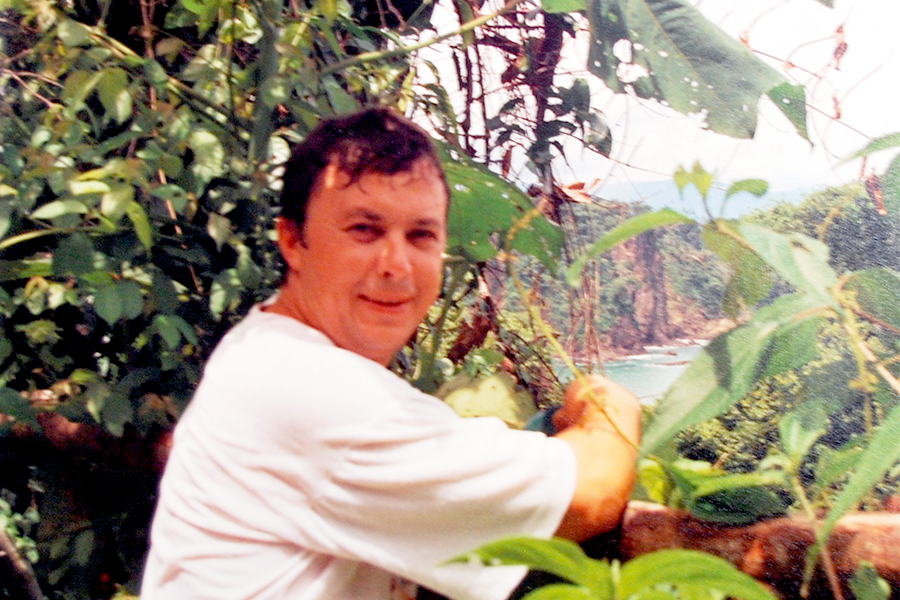
Is the discovery you were telling us about one of the projects you are particularly proud of?
I believe that participation in the project that led us to publish the article demonstrating multisymbiosis in lichens has been a milestone in the field of lichenology that will allow progress in many fields of ecophysiology, evolution… Taking lichens as a model of microecosystems. The article ‘Two Trebouxia algae with different physiological performances are ever-present in lichen thalli of Ramalina farinacea. Coexistence versus Competition?‘ published in Environmental Microbiology, in 2011, represented a change in what until then was accepted as a paradigm in the world of lichens. There was quite a lot of difficulty in its publication because the reviewers found it hard to change the cliché that existed in the world of lichen symbiosis. Its publication was like the starting pistol that has led to the appearance of multiple publications in this field.
What is your assessment of the employment situation in the sector?
Unfortunately, I can’t be optimistic. Botany, at this moment, is the ‘poor sister’ of the biology family, both at secondary and university teaching levels. There has been a huge reduction in teaching load in our discipline. This entails a progressive reduction in teaching staff in this field. Fewer teaching staff, fewer projects, and fewer projects, fewer grants… Job insecurity with temporary contracts, of low amounts, that disillusion young people due to the lack of continuity. More than 50 very, very well-prepared and very enthusiastic young men and women have passed through our laboratory and haven’t been able to continue due to lack of money.
We have to look for and obtain projects to have the necessary money to hire research staff, to have grants available… and this task consumes you because of the amount of paperwork it brings with it. The situation of continuous cuts has affected us quite a lot and, as I said before, I’m not very optimistic. Furthermore, private companies approach the University with suspicion and their investment in R&D is scarce. It’s necessary to reverse this and achieve results that excite the business world to also invest in the field of botany. That’s what we’re up to at the moment.
What role does scientific dissemination, aimed at the general public, have?
Scientific dissemination is key to the advancement of science. The scientist can’t live on the margins of people. It’s necessary that our citizens know what fields are being researched, what’s being discovered, the importance of what is being worked on in the world of science. When science is disseminated, science is valued, when science is valued, new scientists are attracted. However, one must disseminate in a didactic, intelligible, attractive way, showing its applicability and its proximity… and this isn’t easy.
Does your work allow you to meet interesting people?
Many, as I said earlier: Manuel Costa, who with his wisdom and his ability to create enthusiasm has greatly influenced my work; Ana Ibars, meticulous and a great worker in the laboratory and in botany teaching; Eva Barreno, tireless, great researcher and coordinator of researchers; Vicent Calatayud, specialist in the action of pollutants on plants; Miriam Catalá, excellent plant physiologist; Valentín Gavidia, an extraordinary master of masters who infected me long ago with the love for teaching and the improvement of didactics; Salvador Rivas, Jesús Izco, Angel Penas, all of them great botanists… There have been many, very good ones and from whom I’ve learnt a lot.
Do you consider yourself a disciple of any particular botanist?
No doubt about it, of Julio Iranzo. He was an extraordinary plant histologist, he devised new histological and staining techniques. He had an exceptional capacity for interpretation of microscopic images and, despite his apparent anarchy, he had a mental ordering and an enormous capacity for work. He knew how to teach and train his disciples.
And which botanist would you have liked to have met?
Father Jaime Pujiula Dilmé, an extraordinary and very little-known histologist and cytologist, perhaps because of his condition as a clergyman, who carried out an extraordinary task in this field and made important contributions. Also Katerine Esau, master of masters of plant anatomy. And, obviously, I would also have liked to have met Cavanilles.
From what you have told us, you work as part of a team.
In a team, of course, nowadays one works in a team, research groups are multidisciplinary. We contribute studies of anatomy, optical and electron microscopy with multiple techniques, but this isn’t enough, we need the contribution of molecular biologists, physiologists, biochemists and, of course, field botanists. Only by tackling things in a multidisciplinary and highly coordinated way do we arrive at complete and complex studies.
Currently, we’re collaborating with researchers from the Università di Trieste (Italy), Charles University in Prague (Czech Republic), Universidade de Lisboa (Portugal), West Bohemian Museum in Pilsen (Czech Republic), Kew Gardens (Great Britain), Alcalá de Henares University and Rey Juan Carlos University.
To learn about new Nanopore sequencing techniques, there has been collaboration with the group of Prof. Ólafur Sigmar Andrésson, from the University of Iceland (Háskóli Íslands), Reykjavík, School of Engineering and Natural. Furthermore, very interesting and productive is the collaboration with the Interdisciplinary Research Structure in Biotechnology and Biomedicine (ERI BIOTECMED) of the University of Valencia, based in Burjassot. We’ve also begun collaboration for biogeography aspects with Dr Isaac Garrido Benavent, from the Royal Botanic Garden of Madrid (CSIC). And the assembly of the mitochondrial genome of the microalga Trebouxia sp.tr9 has required collaboration with members of the Plant Physiology team at UAH, Elena del Campo, Leonardo Casano and Francisco Gasulla.
Tell us more about the projects you are working on.
We continue, in the field of lichenology, studying the processes of lichen multisymbiosis, the isolation, cultivation and study of lichen algae from an anatomical, genomic and ecophysiological point of view. We’ve just published a very interesting study on one of the new Trebouxias (Tr9), which demonstrates that it’s capable of tolerating an impressive saline concentration and continues with its vital processes. In the field of the action of atmospheric pollutants, we’ve been working on the action of ozone on different plant species in China located around Beijing, with a group of scientists from the Research Center for Eco-Environmental Sciences of the Chinese Academy of Sciences and scientists from CEAM in Valencia. We’re also working on the action of ozone on floral development and its effects on pollen production, especially on some endemic and threatened plants.
Right now we’re also involved in an exciting project that aims to obtain seedless citrus fruits. We’re carrying out this project in collaboration with a broad team of researchers from the Polytechnic University of Valencia. We study the pollination and fertilisation process at a microscopic level.
Can you tell us any amusing or curious anecdote you remember?
Some years ago, a lady brought us samples of some roots that had occupied and blocked the cesspit at her country house. She was convinced it was a pine tree from her neighbour’s property and needed confirmation of the species to sue him, to make him pay for the damage and cut down the tree. She handed us the samples while criticising her neighbour and explaining to us that he was a disaster. When we looked at the samples under the microscope, we saw that they were from a cherry tree. When we passed the report to the lady, she turned pale. The cherry tree was hers and the tree she appreciated most, and now she had to cut it down. She told us: And isn’t there anything, anything from the pine?… It isn’t an amusing anecdote, especially for the lady, but it’s certainly curious: she got the short end of the stick.
How would you encourage current biology students to dedicate themselves to the same work as you?
I’d encourage them by going to the field and the laboratory with them much more than the reality of current teaching allows us; botany is learned and loved in the field and in the laboratory. As D. José Mansanet used to say: ‘Hay que vello, palpallo y estudiallo’ (‘You have to see it, touch it, and study it’). The beauty of the plant world, correctly shown and interpreted, seduces you like everything that’s beautiful. A Bach cantata, when they explain it to you and you listen to it, moves and conquers you, a beautiful Sorolla painting, too… Even more so nature and the plant world, whose author is God himself!
What do you consider the essential skill for your work?
Patience, perseverance and good mood.
And what is the first and last thing you do when you enter your office or laboratory?
The first thing, turn on the light. The last, turn off the light. Both the electric lights and the mental lights.
Are you allergic to any plant?
Thank God I only have a slight allergy to cypress pollen. I feel sorry for my cemetery neighbours who are near me after my burial, I won’t let them rest from so much coughing.
You were also an associate lecturer in the Department of Didactics of Experimental Sciences at the University of Valencia. What things need to be improved in science teacher training? And what’s positive compared to a few years ago?
Along with Botany, the world of didactics and Biology teaching is my other passion. I love transmitting science, transmitting passion for science, infecting students with that eagerness to know the phenomena of life. Many things need to be improved. First of all, teaching materials. Let us think that if Ramón y Cajal were to wake up and enter a classroom, he could give the class just as when he was teaching: a piece of chalk, a blackboard and a discourse… And many years have gone by. Today we compete with the media, with ICT, social networks… and the discourse of many teachers is boring for young people. Teaching aspects also need to be improved; our discipline needs contact with the field and the laboratory. The flipped classroom must be used, question-based learning, and cooperative work must be encouraged. Improve evaluation processes to value daily, imaginative and continuous work and gradually value less the ‘dreaded’ exams that involve ‘studying to forget’.
On the positive side, there is the existence of a Teaching Master’s, serious placements in educational centres and the possibility of taking Master’s degrees in Biology Didactics.
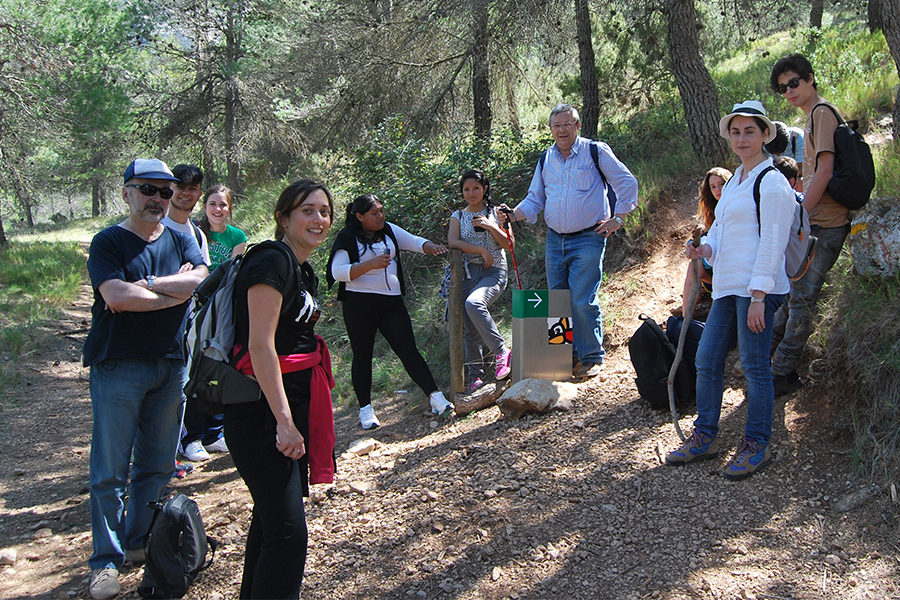
What would you recommend to science graduates who are considering taking a secondary school teaching master’s and who want to dedicate themselves to teaching?
First of all, a vocation for teaching; we can’t have teachers who limit themselves to teaching without transmitting enthusiasm for what is taught, who dedicate themselves to teaching because they haven’t found anything else, who experience teaching as a burden, who see students as ‘enemies’… Secondly, I’d tell them that they must have a great knowledge of the discipline. One only teaches what one knows well, which is why one must study hard during the degree and never stop doing so.