







The Hanging Gardens of Babylon: a mystery of antiquity
At Espores we love to travel through time and discover historic gardens that transport us to past times, because although we can no longer walk through them, nor enjoy the species they once housed, they still continue to inspire us and awaken our curiosity. Their unique and romantic structures, and their exotic and abundant vegetation, make our imagination fly and with a little effort we almost manage to visualise them in all their splendour. And what better example to explore than one of the most ancient and mysterious in history? Join us to discover the famous Hanging Gardens of Babylon, one of the Seven Wonders of the Ancient World, settings of legends that still fascinate us today.
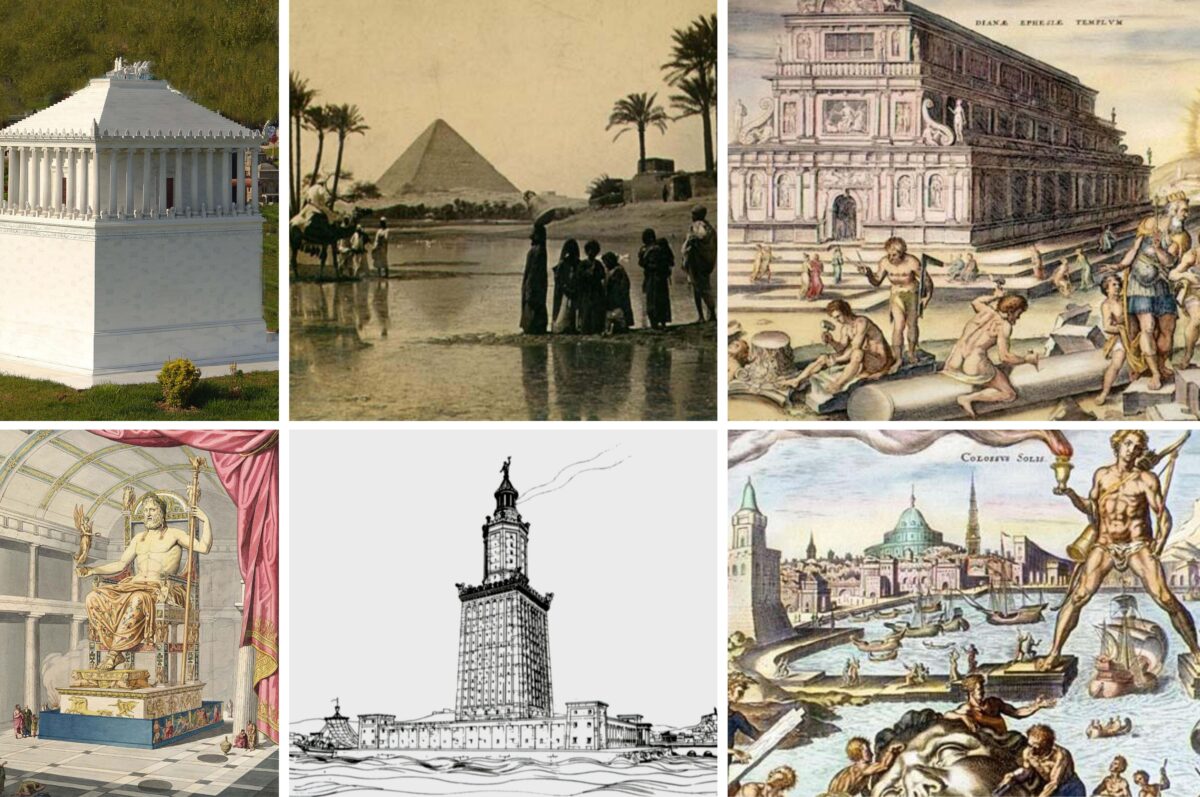
The Gardens of the Babylonian capital, together with the Lighthouse of Alexandria, the Colossus of Rhodes, the Temple of Artemis, the Statue of Zeus, the Mausoleum of Halicarnassus and the Great Pyramid of Giza were named by Herodotus, the historian considered the father of history, and other classical authors, as the seven Wonders of the ancient world and, except for the pyramid, unfortunately all have disappeared. Nevertheless, and as happens with the rest of the members of the exclusive list, the Hanging Gardens, despite not having survived, continue to capture the interest of historians and archaeologists, who for centuries have tried to figure out the enigmas that surround them. It is also true that the real existence of these gardens has been the subject of endless debates, but their influence on our culture is undeniable, still representing the ideal of integration between nature and innovative architecture.
The origins of the myth
Located in the ancient city of Babylon, now the modern city of Hillah in Iraq, the Hanging Gardens were admired by their contemporaries, who were fascinated by their design and beauty that had no rivals. It is believed they were erected during the reign of Nebuchadnezzar II (634-562 BC) and that, according to legend, the monarch ordered them built to prove the love he felt for his wife, Amytis of Media. The princess missed the hills and vegetation of her homeland, in the mountainous region of northwestern Iran, and the gardens were Nebuchadnezzar II’s attempt to recreate the landscape she so missed and make her feel at home.
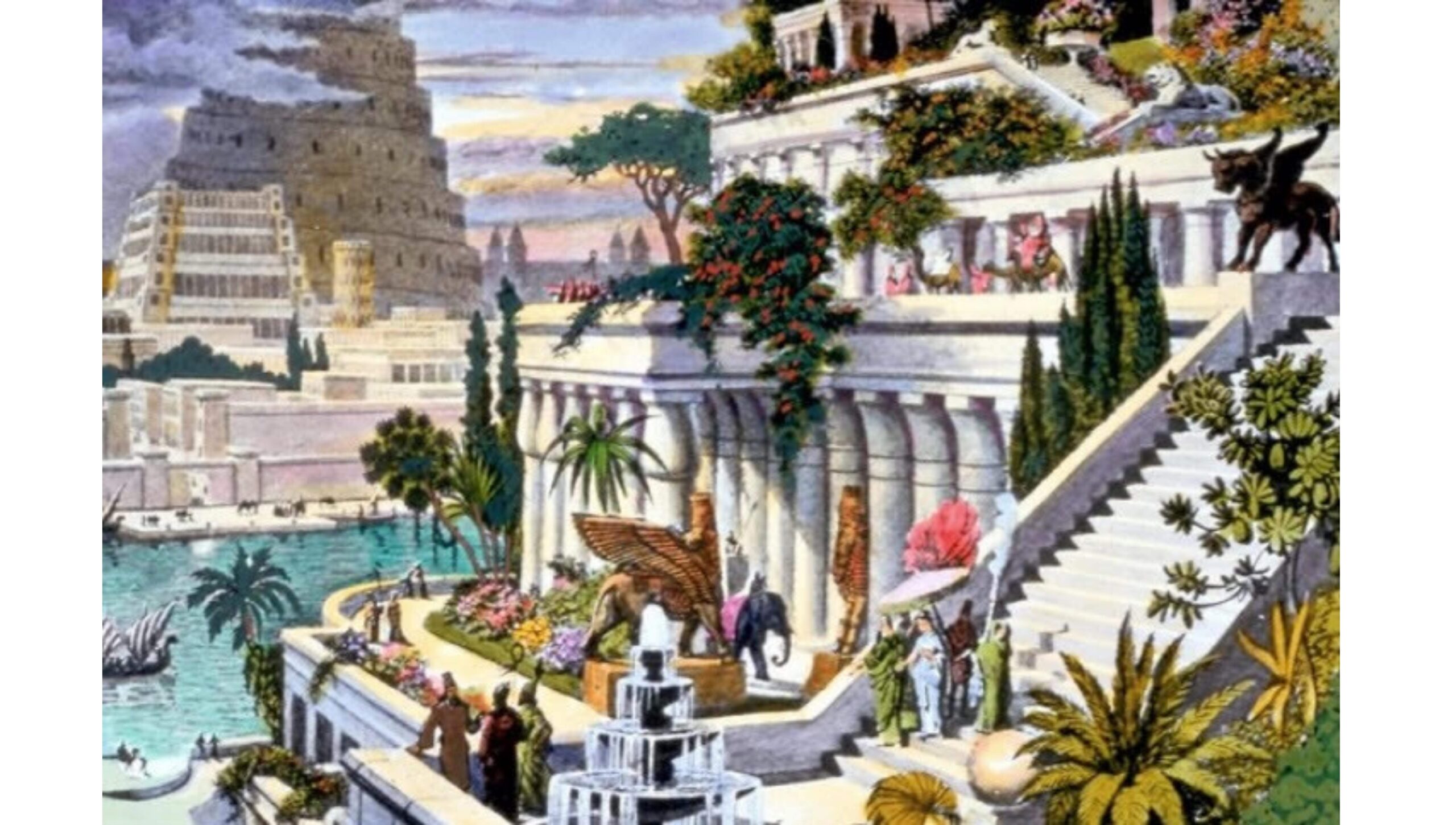
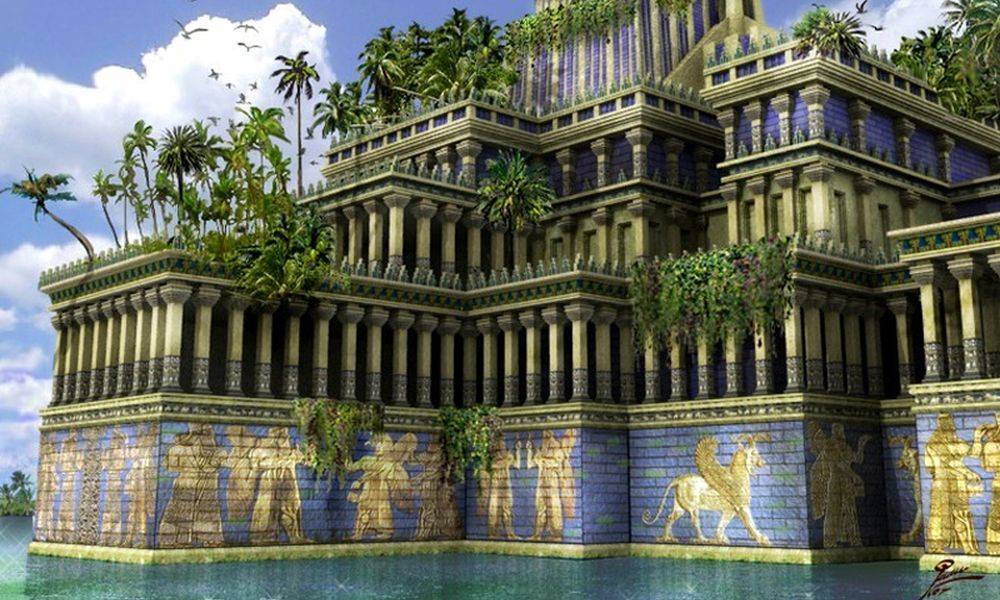
Representation of the Hanging Gardens of Babylon/Wikipedia
The first mentions come from Greek authors such as Philo of Byzantium, Diodorus of Sicily and Strabo. These classical texts often differ from each other and present many gaps and contradictions, but most agree on some aspects of the description of the famous gardens. They define them as a large square space with a series of terraces or superimposed steps that rest on arches with vaults supported on robust square-section pillars. Additionally, the terraces seemed to sail through the air thanks to their structures, very complex for their time, and caused great surprise to visitors to the city.
According to ancient writings, these terraces housed a great variety of fruit trees of unknown species, artificial streams, flowers of species brought from distant lands and plants, forming wide walkways adorned with sculptures and rich decorative reliefs. The plants hung from the balconies and gave the effect, in the eyes of travellers, of being suspended in the air. All these elements resulted in lush and leafy vegetation, which contrasted strongly with the desert landscape of Mesopotamia.
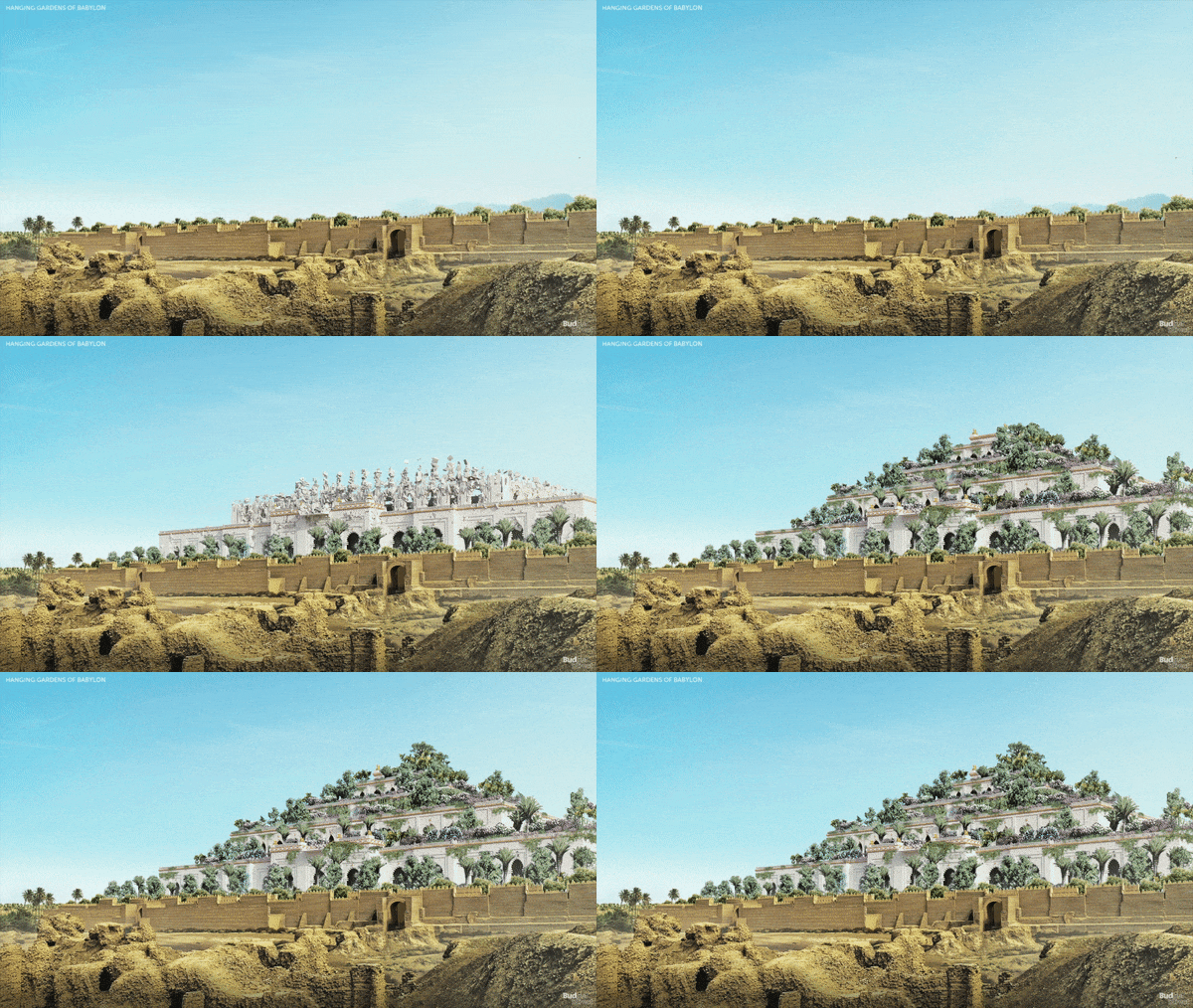
Gif showing a modern reconstruction of what the hanging gardens might have looked like in antiquity./NeoMam Studios.
Engineering and design ahead of its time
The gardens are believed to have used a series of advanced irrigation systems to keep the vegetation alive and some theories suggest that perhaps a sophisticated network of pumps was employed to transport water from the Euphrates River to the garden terraces. This advanced irrigation system would have allowed the cultivation of lush vegetation in an environment where it otherwise would not have survived, as well as the creation of a suitable microclimate for flora that had to adapt to the region’s desert climate.
The use of materials such as tiles and bitumen (as a sealant) in the construction of the terraces helped create a durable structure resistant to weather conditions, and the combinations of these materials with very advanced construction techniques widely demonstrate the skill and creativity of Babylonian builders.
An enigma yet to be revealed
The Hanging Gardens are the only one of the seven wonders whose exact location is not known. In fact, the lack of preserved Babylonian written sources mentioning the gardens, as well as the absence of conclusive archaeological evidence about their location, has led some researchers to consider that their existence might simply be a myth, and that the stories or descriptions about the famous gardens were exaggerations or simply inventions.
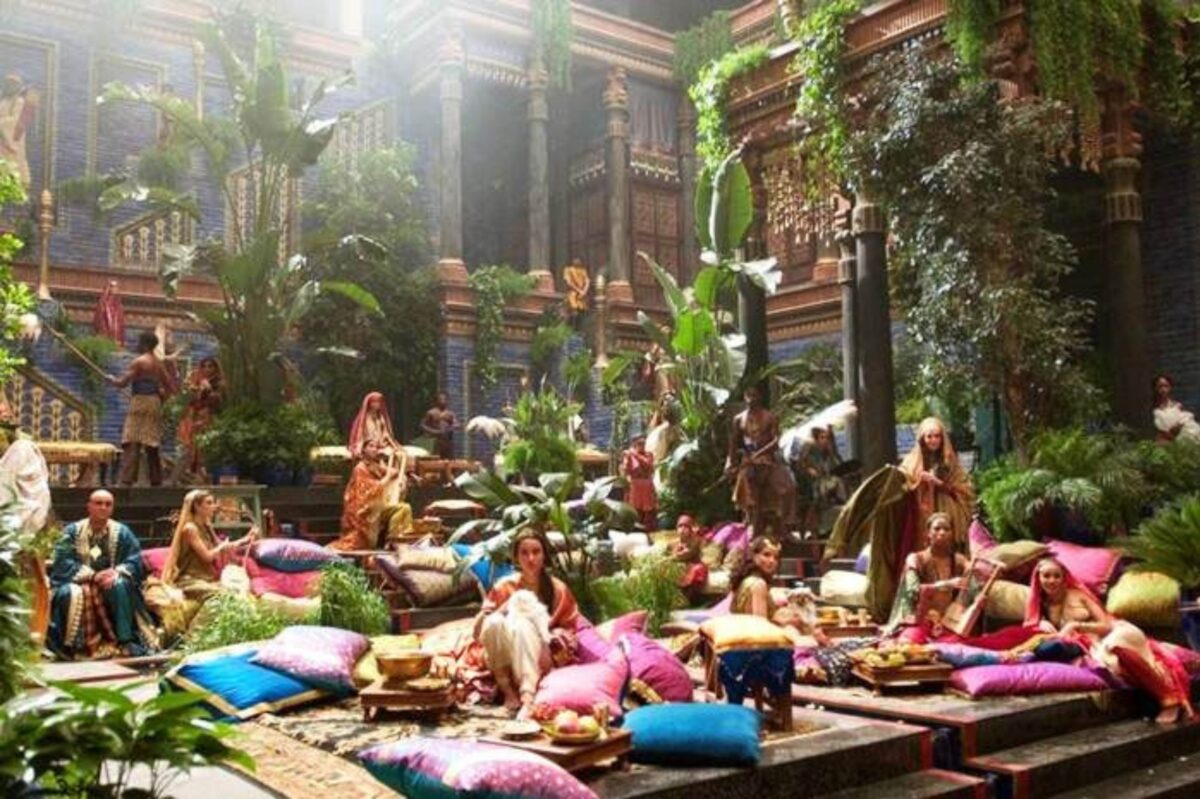
Recreation of the Gardens from Oliver Stone’s film, Alexander the Great (2004).
The explanations given to question the real existence of the Gardens are numerous. Firstly, it has been argued that, given that the descriptions of the wonder come from Greek and Roman texts written centuries after their supposed destruction, their existence could be only the product of ancient historians’ imagination, representing the romantic ideal of the oriental garden. On the other hand, it has also been speculated that the gardens did indeed exist in Babylon, but were completely destroyed in the 1st century AD. And there’s more, another hypothesis suggests that the legend might actually refer to the garden built by King Sennacherib (in the 7th century BC) in Nineveh, the capital of the Assyrian Empire, near the current city of Mosul. This theory is based on the fact that Nineveh was sometimes called “ancient Babylon”, which could have given rise to a major historical mistake, placing the famous gardens in Babylon and not in Nineveh.
Despite all these unknowns, other research professionals still give credit to the classical texts and maintain hope that future archaeological findings will help the existence of the most living and natural wonder to finally stop being an unproven hypothesis.
Between reality and fiction
The ambiguity of historical sources, added to the fact that we still don’t know the exact location of the Hanging Gardens, has made them become part of the set of great archaeological legends. Moreover, the mystery surrounding their existence has fuelled fascination throughout the centuries and has turned them into an icon of splendour and exoticism. We all find it easy to identify them, as they have been recreated on countless occasions, from ancient engravings and Renaissance paintings, to current representations in comics, films and documentaries, and doing a quick internet search we find hundreds of different illustrations that recreate the Gardens, which has contributed significantly to maintaining their legendary status in the collective imagination. For the time being, here at Espores we have a new review about these dream gardens. Will we ever stop dreaming?