









The Wood of Trees: A Tale of Weight and Equilibrium
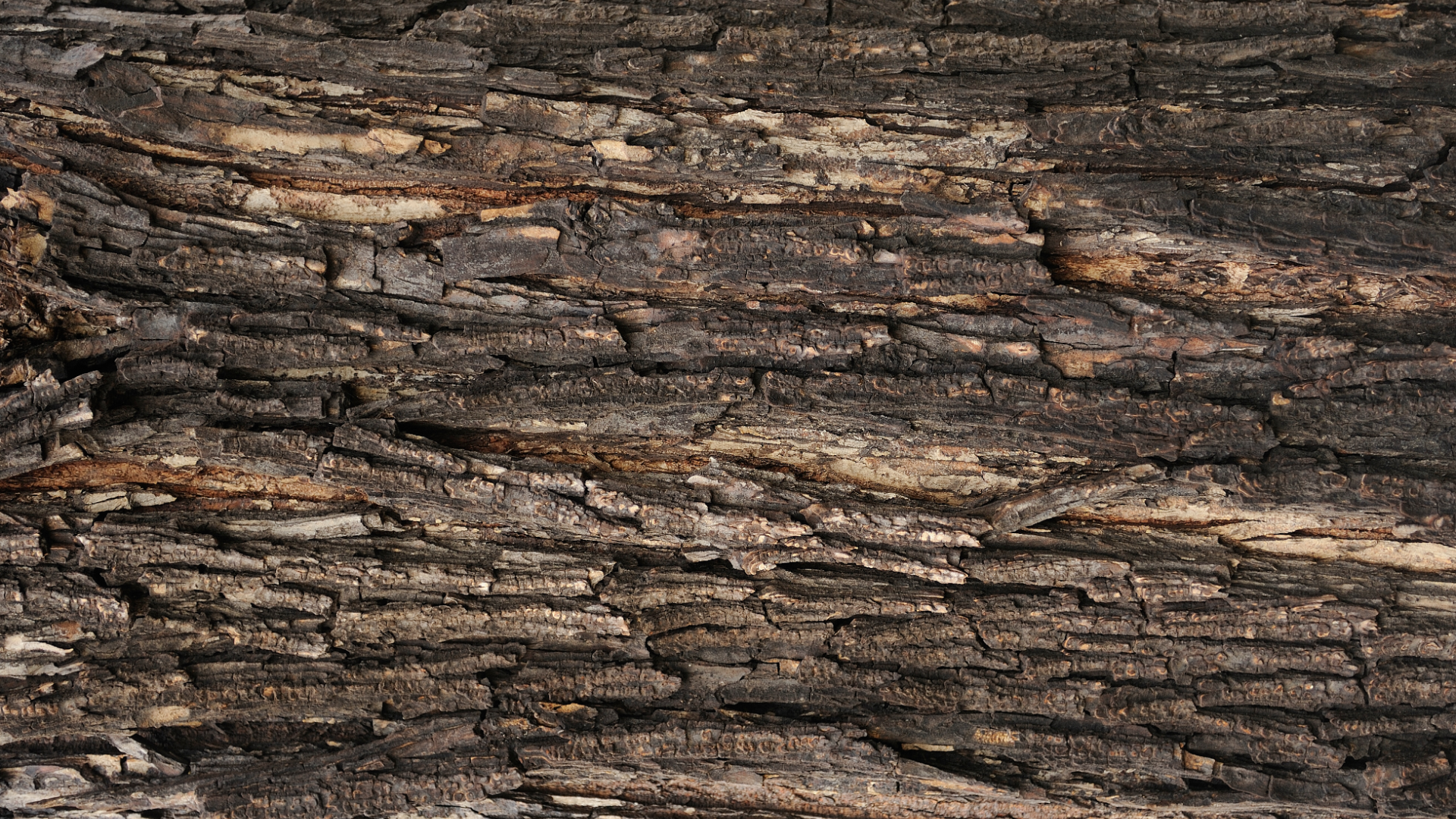
Plants are constantly subjected to different environmental stimuli, among them mechanical ones, such as wind. Thus, a study has focused on one of these mechanical stimuli, specifically radial growth, which has a particularity: it is constant. Researcher Ángela Carrió tells us about the importance of wood, and how a laboratory work can help us understand the relationships between the weight of the wood, growth hormones, and the proteins involved.
If anything about plants marvels us it is their growth; one day you plant a seed, and if the care is adequate, in no time you find yourself with an entire vegetable structure that goes straight toward the light of the sun. And this growth, in plants, is defined in two ways: the so-called primary growth, and the secondary. The first of the two, the primary, if you allow me the redundancy, is characterized by the growth in length of both the root and the stem, and is a consequence of the activity of the respective meristems, the tissues responsible for plant growth: the radicular elongates the root and bears the acronym RAM, from the English root apical meristem, and the apical does the corresponding with the stem, and is called SAM, shoot apical meristem.
Meristems are formed by undifferentiated stem cells with a high rate of division. These cells give rise to the different tissues of the plant. And here we can ask ourselves, how do the cells know which tissue they must originate? Very easy, or not so much: cellular identity is determined by a combination between the hormonal content and the position within the organ. The main hormones that intervene in primary growth are, on one hand, auxins, in charge of cellular division, and on the other, cytokinins, necessary for the expansion of the cells.
With this information we are already familiarized with how plants grow in length, so now it is time to talk about secondary growth, that which gives thickness to both the stems and the roots, because it makes the radius of these organs increase. An important and necessary growth to sustain the stems while these grow in length searching for the light. And for this secondary elongation to take place, the activity of what is known as vascular cambium is necessary. The question is obligatory: what is this cambium? Well, another meristematic tissue, this one with the peculiarity that it gives rise to the vascular tissues in charge of transporting water and nutrients to all the organs of the plant. Thus, when the cambium is active it produces these tissues: the xylem and the phloem.
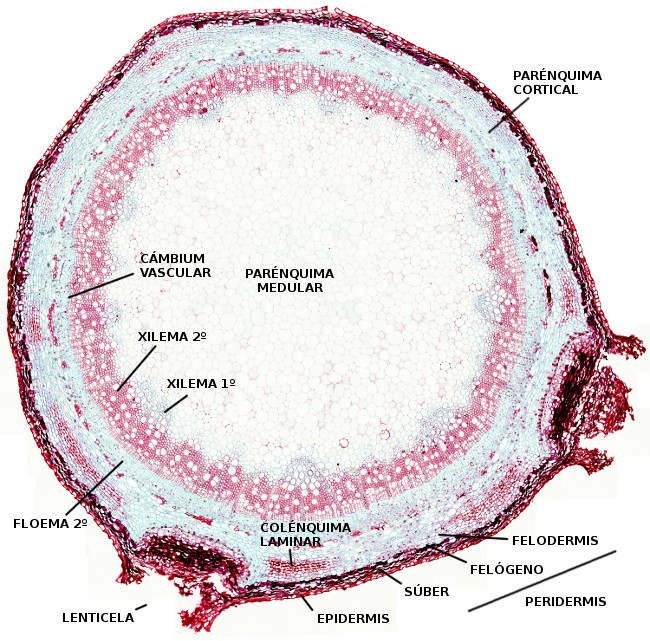
And how do we activate this cambium? With some of the hormones we spoke of before, the auxins, which are indispensable. They accumulate until a maximum and then the cambium is activated, which produces more xylem, giving rise to the formation of wood; therefore the stem grows in thickness and gives stability to the plant so that it can continue growing in height and be resistant to various mechanical stresses, such as wind might be.
Secondary growth
Once familiarized with the growth systems of plants, it is necessary to begin to put in value the importance of the study of secondary growth. On one hand, wood has a very important role as a CO2 sequesterer, given that it is one of the largest terrestrial carbon sinks after the oceans. These absorb between 25 and 30% of the CO2 emitted by human activities each year; afterward this carbon dissolves in the water where it is absorbed by marine photosynthetic organisms, such as phytoplankton, and is used for photosynthesis. Since photosynthesis is a process that many organisms share, among them plants, trees also capture CO2 from the atmosphere when they perform it, and transform it into biomass that is stored in the form of cellulose and lignin in the wood. It is not difficult to make the connection: having plants and trees around can help us reduce environmental CO2.
And on the other side, studying secondary growth has a great industrial, environmental, and forestry interest, given that wood is used for construction materials or in the manufacture of paper, among others. So, forestry management that favors the planting, growth, and collection of trees can maximize the capture of CO2; that is why it is so important to plant new trees after logging: it is the way to maintain the cycle of active carbon capture.
Demonstrating a hypothesis
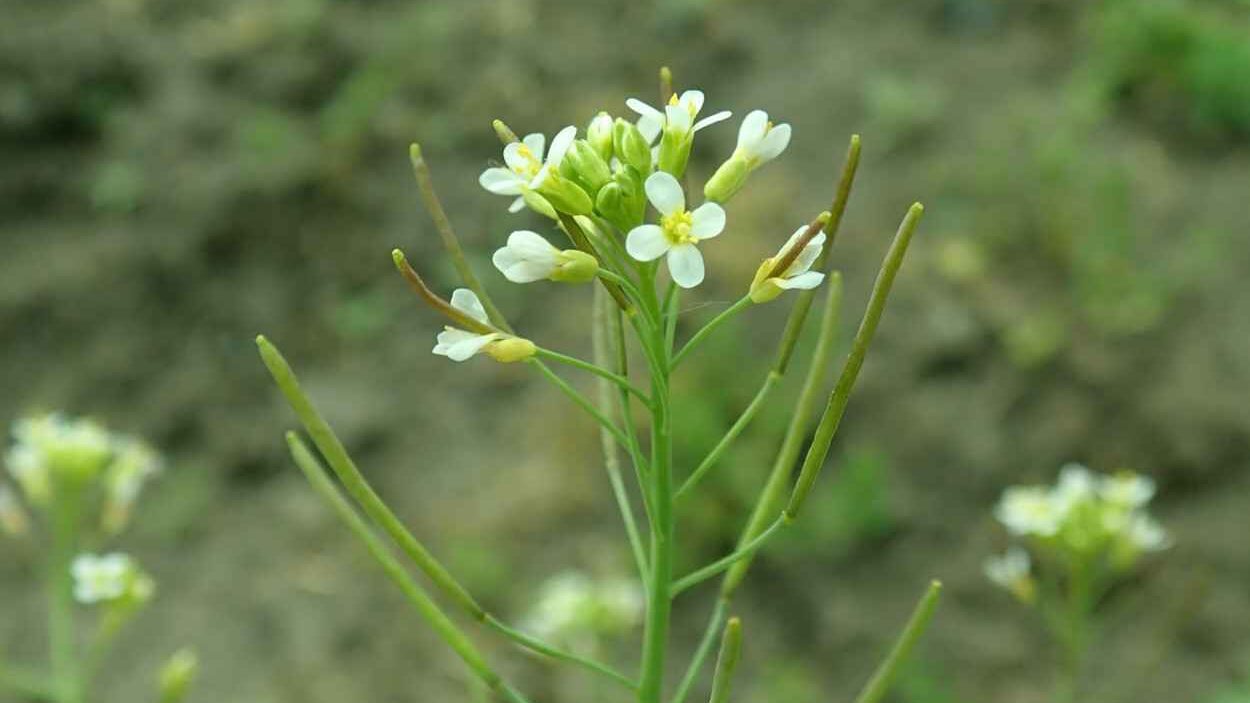
Although perhaps we had not stopped to think about it, the importance of the process of wood formation has become clear, but now we move to the laboratory to study it and understand it in detail. In science, we usually employ organisms as a model of study, and in plant biology the model organism is Arabidopsis thaliana, due to its biological properties. This plant is of fast growth, has a reduced size, produces many seeds, and has facility to generate mutants—all characteristics that are going to help us in our works. And specifically in our study, although Arabidopsis is an annual herb, we use it to study secondary growth, given that at the base of the floral stem we find the cambium and, therefore, there is growth in thickness.
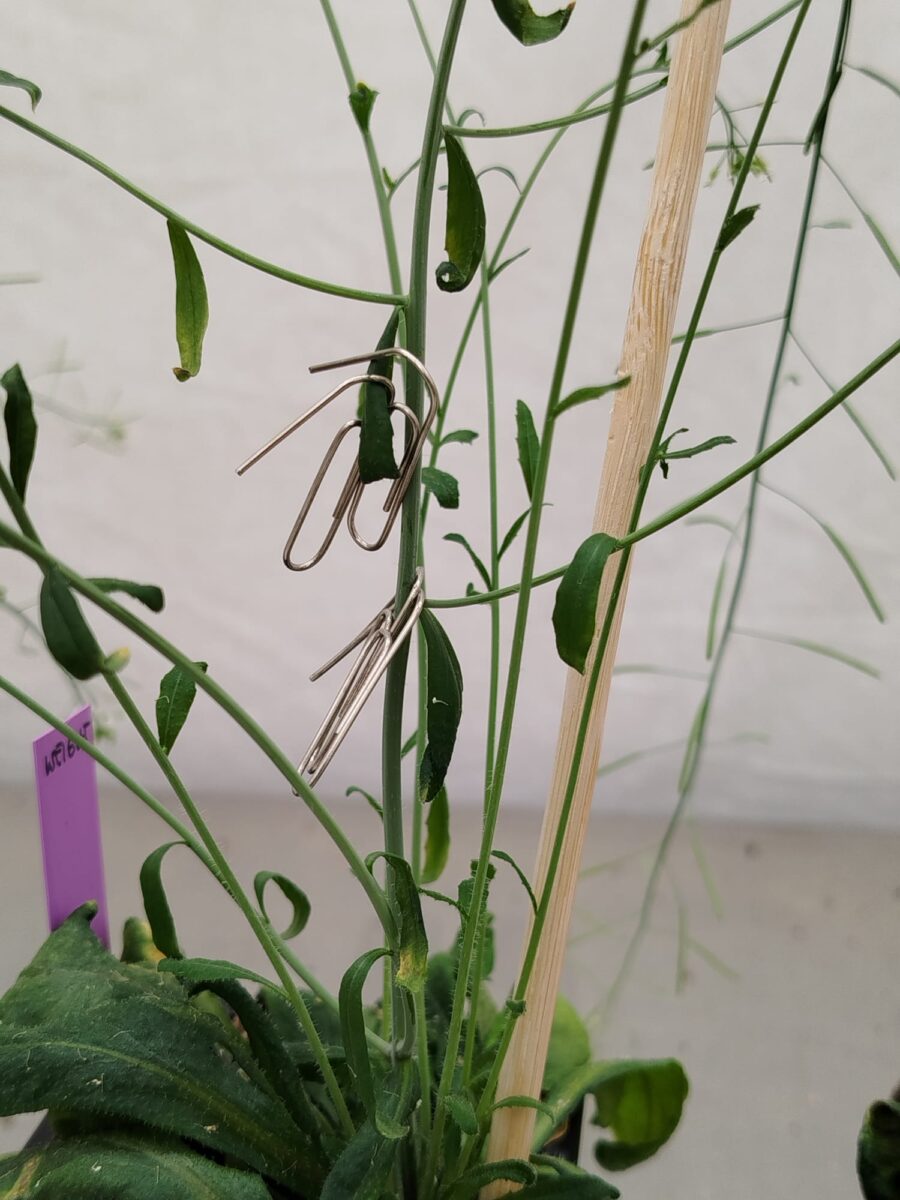
Then, we can already get started with our hypothesis: that the stem’s own weight can stimulate radial growth in plants; and with the model we are going to study, a new and simple system that simulates the effect of the factor in question—the weight—on growth, without affecting other parameters related to it. And the material is very simple: we add clips to the branches of the stems, as if they were the balls of Christmas trees. Thus, we manage to generate an accumulation of weight that simulates the natural weight gain of the stem of an adult plant. And what have we observed? That by adding this weight they have 60% more secondary growth.
The next step to better understand what was happening was to decapitate the stem, eliminating thus the apical meristem and, with it, the production of auxins. And can you not guess what happens when we treat the decapitated plants? Well, perhaps you have guessed it: they do not respond to the weight treatment. Therefore, with this experiment so simple we have discovered that auxins play an important role in the response to weight.
A genetic question
Then, to know more about the contribution of auxins in all this process, we characterized the response to the treatment of mutants that have the auxin transport system altered. In concrete, we studied some transporters called PIN, and which are a family of 7 proteins. Surprisingly, of the 7 transporters only the mutant of protein 3, PIN3, did not respond to the weight treatment. This result indicates to us that this third transporter can have a relevant role in weight-induced secondary growth.
Therefore, we centered on the function of PIN3 in this process and studied it from a more cellular point of view. We added a fluorescent tag to PIN3 to observe the localization of the protein in normal conditions and if there was any change when we add the weight. And yes, we discovered that upon increasing the weight on the stem, PIN3 changes position inside the cells: it does not concentrate at the base of the cell, it expands toward the sides, as if the plant were “recalculating” its architecture.
It is necessary to keep in mind that the weight can generate an effect of compression that membrane proteins like PIN3 can capture. This change in the distribution of the transporter generates a radial redistribution of the auxin flux that reaches the cambium. Thus, if we remember, by generating a maximum of auxins the cambium is activated, producing more vascular tissue that reinforces the stem. It is as if PIN3 translated the weight into an order to build.
Before this discovery, it was necessary to check that this mechanism is not exclusive to Arabidopsis, so we transferred the experiments to trees, and we chose for the study the poplar (Populus tremula x tremuloides). By means of CRISPR genetic editing techniques, we generated mutant trees for PIN3 and observed that they also did not respond to weight. Therefore, the role of PIN3 is conserved in woody species, suggesting an evolutionary function in angiosperms.
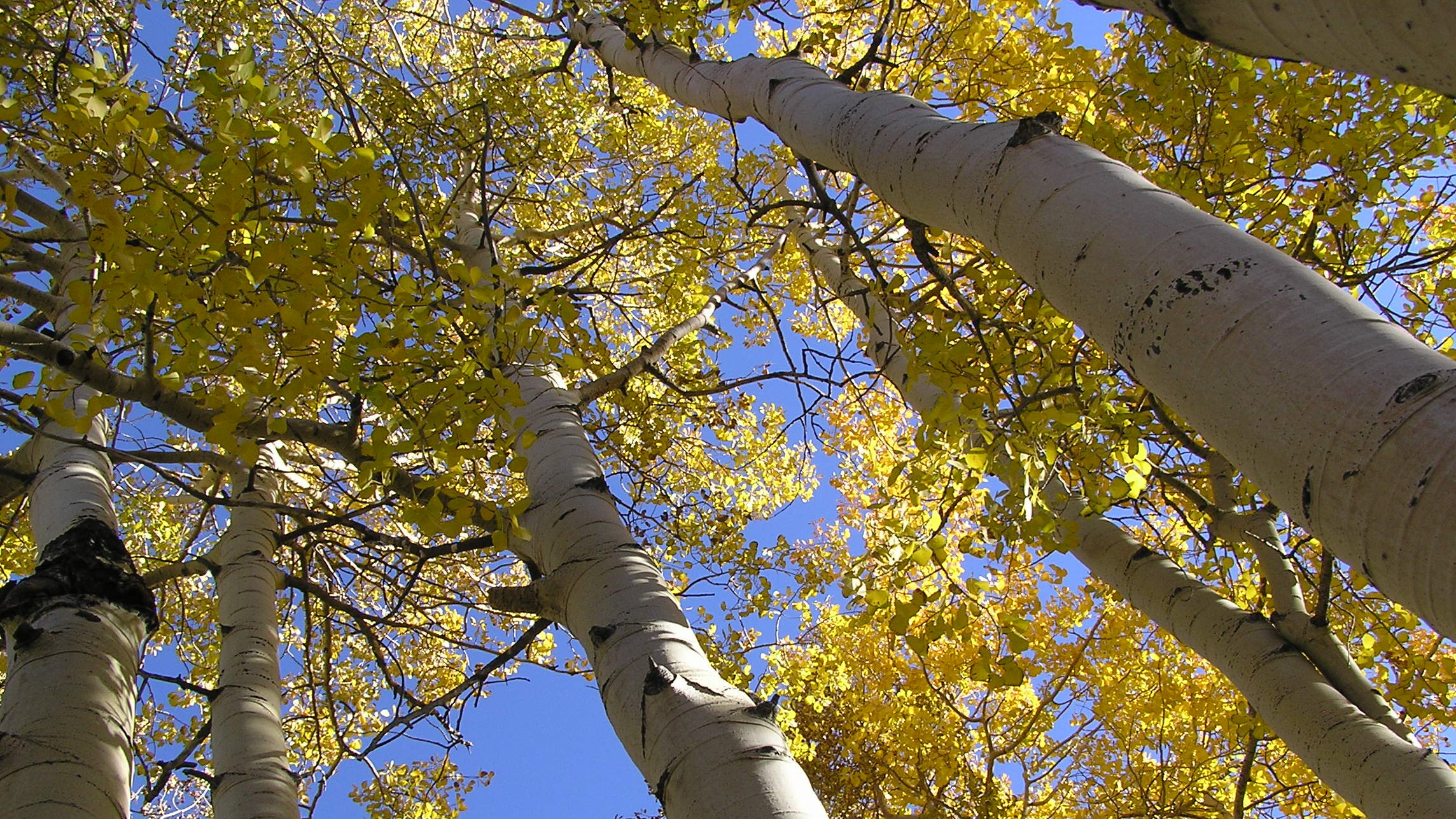
This leads us to think that the PIN3 protein could be the key to designing plants that adapt better to their physical environment, support better the weight of fruits or, even, be more resistant in urban environments. PIN3 could become a biotechnological target to improve the structural stability of agricultural and forestry species.
For years, botany professionals have observed how the stems of plants were increasing in diameter as they grew. With this study, we have taken a step forward toward the understanding of plant architecture where the coordination between longitudinal and radial growth is essential for the survival of plants. Our study reveals that PIN3 acts as a molecular translator of the plant’s own weight and its capacity to reinforce itself. In other words, PIN3 allows the plant to “feel” its own weight and generate a response in consequence.


 Guest signature