








The Albarda garden, a botanical gem in Pedreguer
In espores we love to meet other gardens, therefore this week we invite you to explore with the geographer Nico Vives an authentic botanical gem, for many still unknown: the Albarda Garden, in the town of Pedreguer. We encourage you to discover this shelter for nature and Mediterranean gardening lovers, a green treasure that you must visit in every season of the year in order to appreciate its transformation and the diversity of its flora. Without a doubt it is an unforgettable experience that will connect you with the beauty and serenity of our natural environment.
This cozy and bucolic garden of about five hectares of extension, located in Pedreguer, has become a reference model and an unavoidable visit for autochthonal Mediterranean gardening lovers. Let’s make a leisurely tour through all its corners, focusing on the origins of the garden, its toponym, its architectural contributions, the activities that are scheduled, etc. In short, a very complete itinerary of this nice shelter.
We present a unique oasis in the middle of the oasis itself that is the region of the Marina Alta. The Albarda Garden is a pleasure for the senses. A green space where you can relax and take a walk peacefully. We could say that this place is some kind of paradise in the middle of an urbanistic chaos in the Mediterranean coast.
The origins of the garden
This project started in the eighties, when the chemical engineer and businessman Enrique Montoliu acquired a piece of agricultural land (where there were only pine trees and some orange and lemon trees) in the Albardanera area, in Pedreguer, on the north face of the Sella mountain and with the geological sphinx of Montgó in the background. The initial idea was, simply, to have a second residence, like any other in the Marina Alta area, with its own private garden of exotic species.
When the construction of the house and the garden was finished in 1990, Montoliu, a patron of nature, was lucky enough to meet a person who worked in the autochthonal plant world, Juanjo Todolí, who advised him on the benefits of the use of the house. Therefore, the project, which started as strictly private and without taking sustainability into account, began to be opened to the public (at that time only one Saturday a month) so that it could be visited.
As a result, in 1996, Montoliu created Fundem “as a matter of responsibility, I couldn’t keep this to myself”, he explains. It is a non-profit foundation for the conservation of Mediterranean fauna and flora, which has brought together thousands of partners and destines economic resources to the acquisition of land in different locations for their protection and custody by conservationist entities, such as Mas del Peraire (in Tinença de Benifassà, Castellón), or other lands in Vall de Gallinera, Serra de Bèrnia, Yàtova, Marjal d’Almenara, La Casella (Alzira), Vall de Laguar, Benimantell, Serra d’Espadà, Múgica (Vizcaya) o Villacañas (Toledo), among others. Fundem looks at itself in the mirror of the National Trust, in the United Kingdom, an icon of private initiatives for the protection of nature created in 1895. Millions of partners finance this organization.
A toponym with geographical history
The next question is where the name of the garden comes from. Albarda comes as a consequence of the fact that the rural area where it is located is called, as we mentioned before, the Albardanera, located at the northern end of the municipality of Pedreguer. Nowadays, we only distinguish between the Albardaneres Blancas and the Rojas, areas that border the municipality of Dénia, but in the land register of 1913 it was an area of considerable extension that was subdivided into many zones.
According to the book “Pedreguer, memòria d’un poble”, we have to consider the origin of the word from the burdock or “llapassa”, a herbaceous plant of the family of composite plants (Arctium minus). The burdock comes from the same family as the word albarda (from the Arabic al-bárda’a), which means “harness for beasts of burden”, that consist of a pillow full of straw, of flock, which adapts to the animal’s back. Albardanera refers to the two almost identical twin peaks of the Sella mountain, which look like a horse saddle. Therefore, the toponym of the current garden has a very curious historical, topographical and botanical basis.
We must also highlight the environment where this garden is located. In an eminently tourist area such as the Marina Alta, between the overcrowded coastal towns of Dénia, Jávea or Calpe, we find this green space located next to an urbanization, La Sella, in Pedreguer. Nevertheless, the Albarda is a type of natural redoubt, where you can enjoy a beautiful scenery for a few hours, calmly, between the sea and the mountain. All in all, an oasis in the desert where you can contemplate the vast variety of plant species that it holds. An alternative to the typical and worn out tourist binomial of sun and beach.
Different gardens in the same space
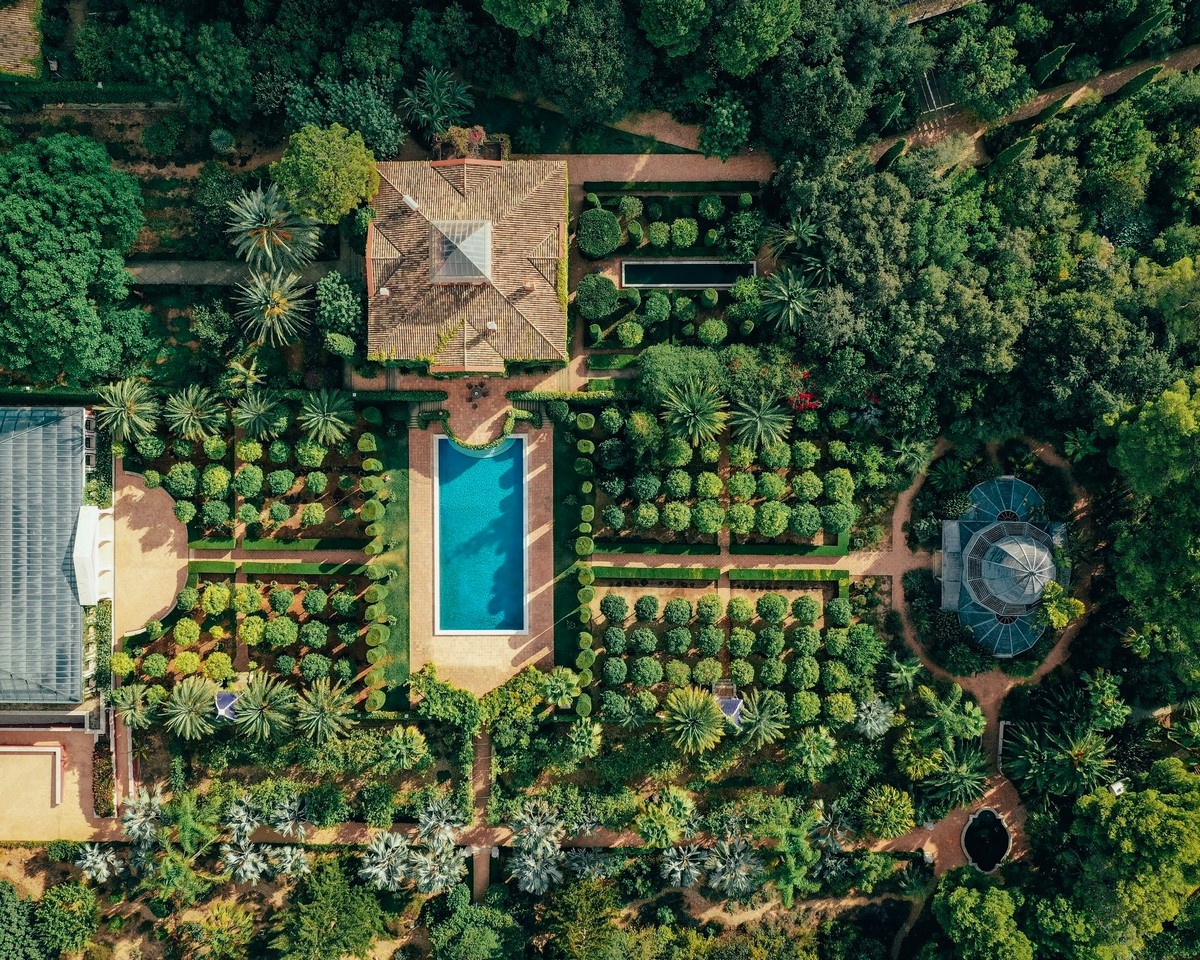
We could define the Albarda as a garden of gardens, because there are clearly differentiated areas inside. In this sense, there we’ll be able to walk through a formal Renaissance garden (fundamental element of European gardens) very close to the house, a traditional Valencian garden with Arab influences, a forest area with Mediterranean species and a riverside forest area.
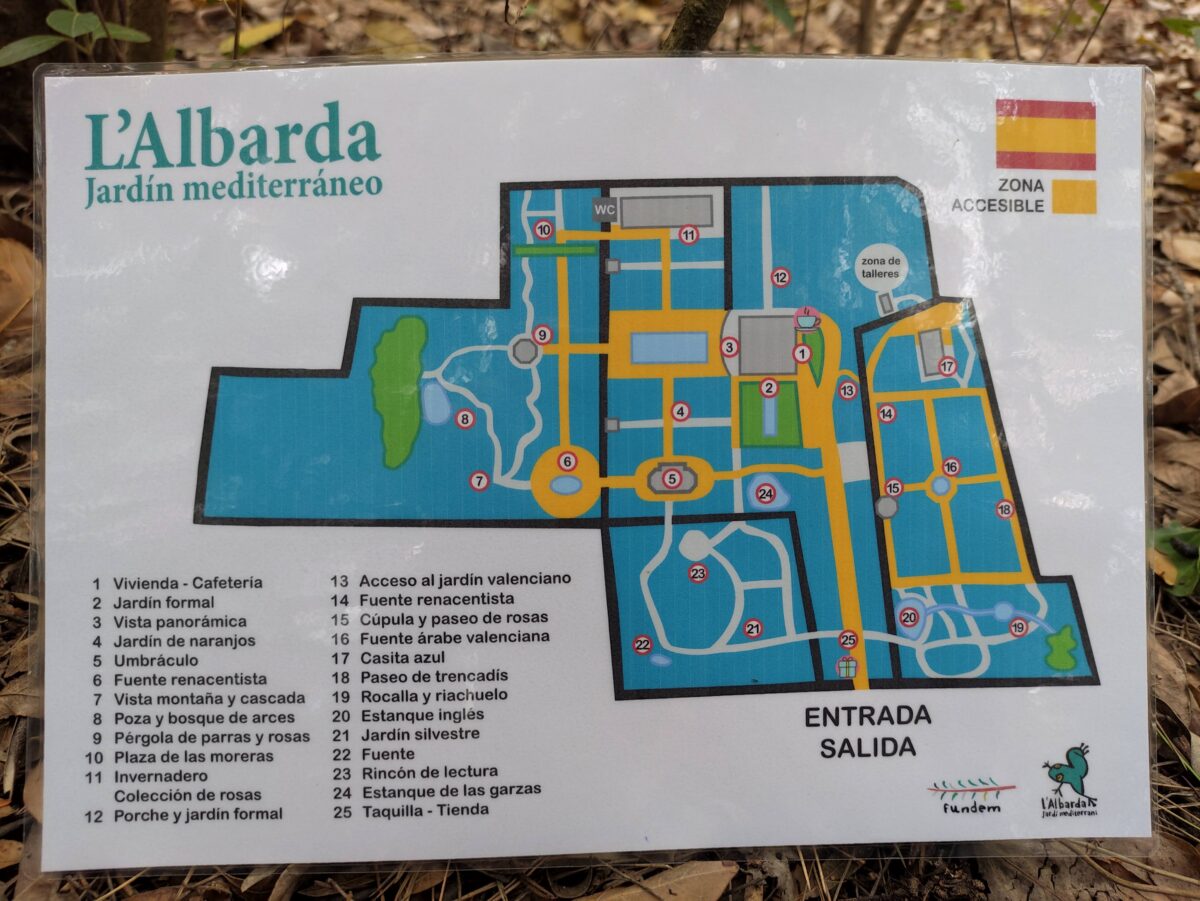
First of all, the formal Renaissance garden has very organized spaces, architectural lines and well-defined geometric layouts. In regards to the finishes and decoration, we can find baroque, renaissance and neoclassical details. The chosen species in this case (such as the arrayán Myrtus communis subsp.tarentina) allow repetitive cutouts and design of shapes. Moreover, the use of fountains and water dispensers are elements that can’t be missing in the design of this type of garden, and their location will look for symmetry. Different types of materials such as natural stone, marble gravel, antique brick and iron are traditional elements that do not go out of fashion and that integrate perfectly with each other.
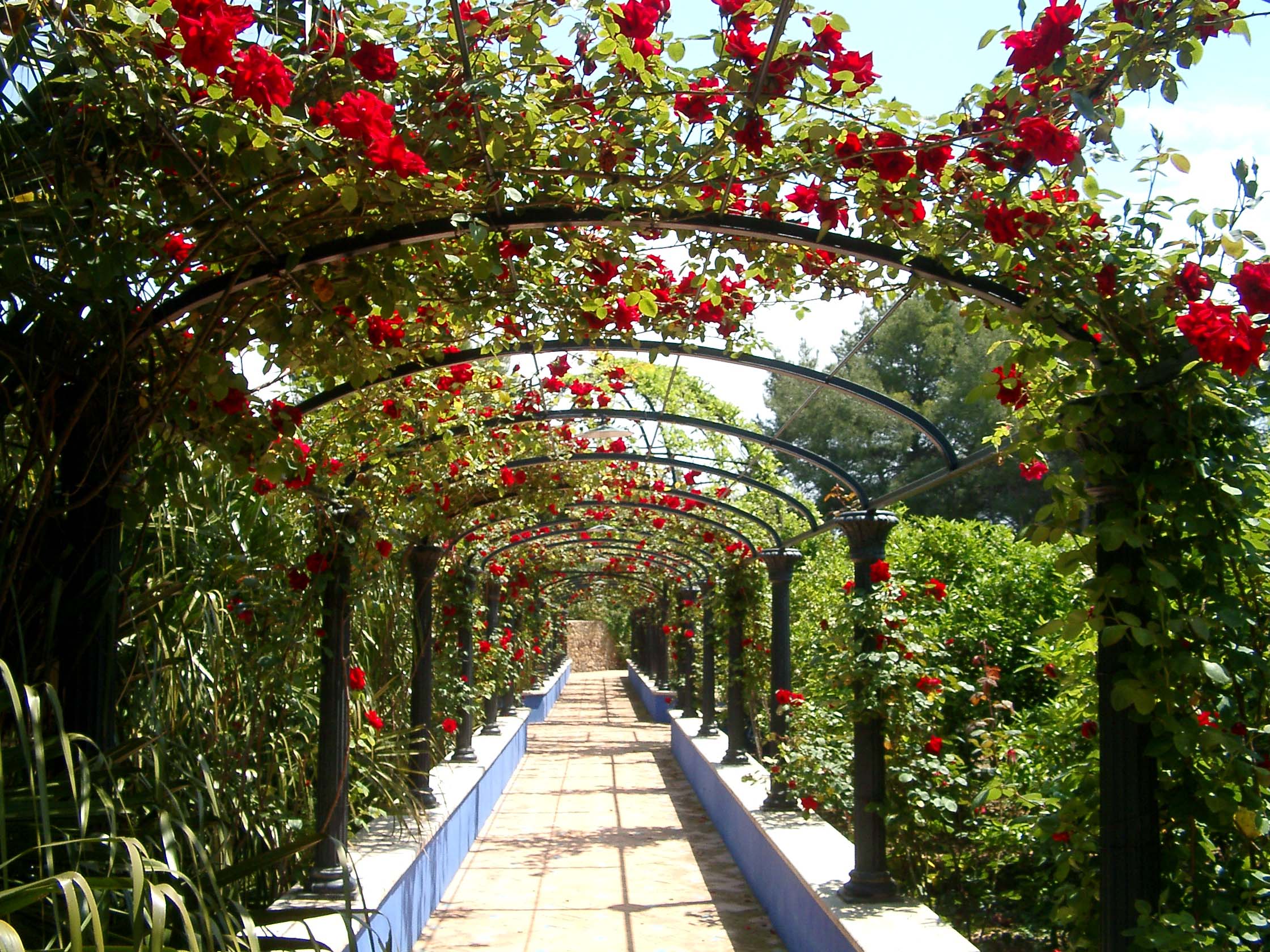
Regarding the Arabian garden, in spring, it is impregnated with the scent of jasmine and mandarin. It consists of four big squares marked with boxwood bushes(Buxus sempervirens) and densely planted with orange trees (Citrus sinensis). In the forest area we can find Portuguese oaks (Quercus faginea), holm oaks (Quercus ilex), an eighty-year-old specimen of cork oak as the oldest tree in the garden (Quercus suber) and Mediterranean hackberry trees (Celtis australis), among others, with a Mediterranean undergrowth composed of the omnipresent laurustine (Viburnum tinus), bay tree (Laurus nobilis), strawberry tree (Arbutus unedo), European fan palm (Chamaerops humilis) or kermes oak (Quercus coccifera). Finally, the rockery, which is artificial, is a small elevation built with limestone from which a waterfall falls into a pond.
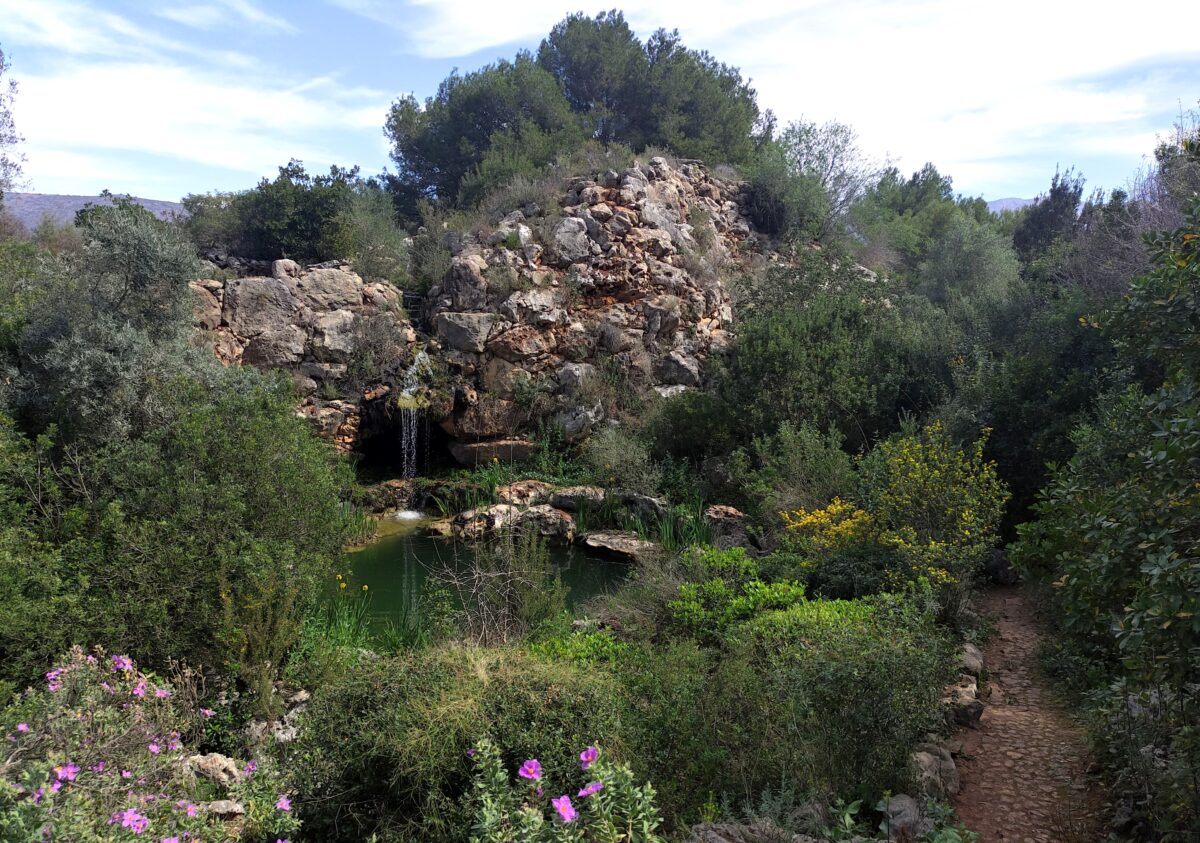
In the Albarda we can find more than seven hundred species, with a great variety, and although the majority of plants are autochthonal, there are also araucarias or holly trees, as well as some tropical species, a collection of palms and a collection of roses. And, of course, we need to highlight some endemic species present in the garden, for example the Silene Hifacensis.
In addition, we will see a rich variety of sculptures and art during the walk through the garden. We can’t miss the trencadís, a mosaic of broken ceramic used to reproduce beautiful forms of the animals in the area, created by the Valencian artist Cento Yuste. The whole scenery is an authentic pleasure for the senses: to see, to smell, to hear… observe the colors, that change throughout the seasons according to the annual cycle of plant species. Smell the perfume and the fragrance of the collection of roses. To be able to listen to the birds singing happily or the sound of water running in the fountains, streams or ponds.
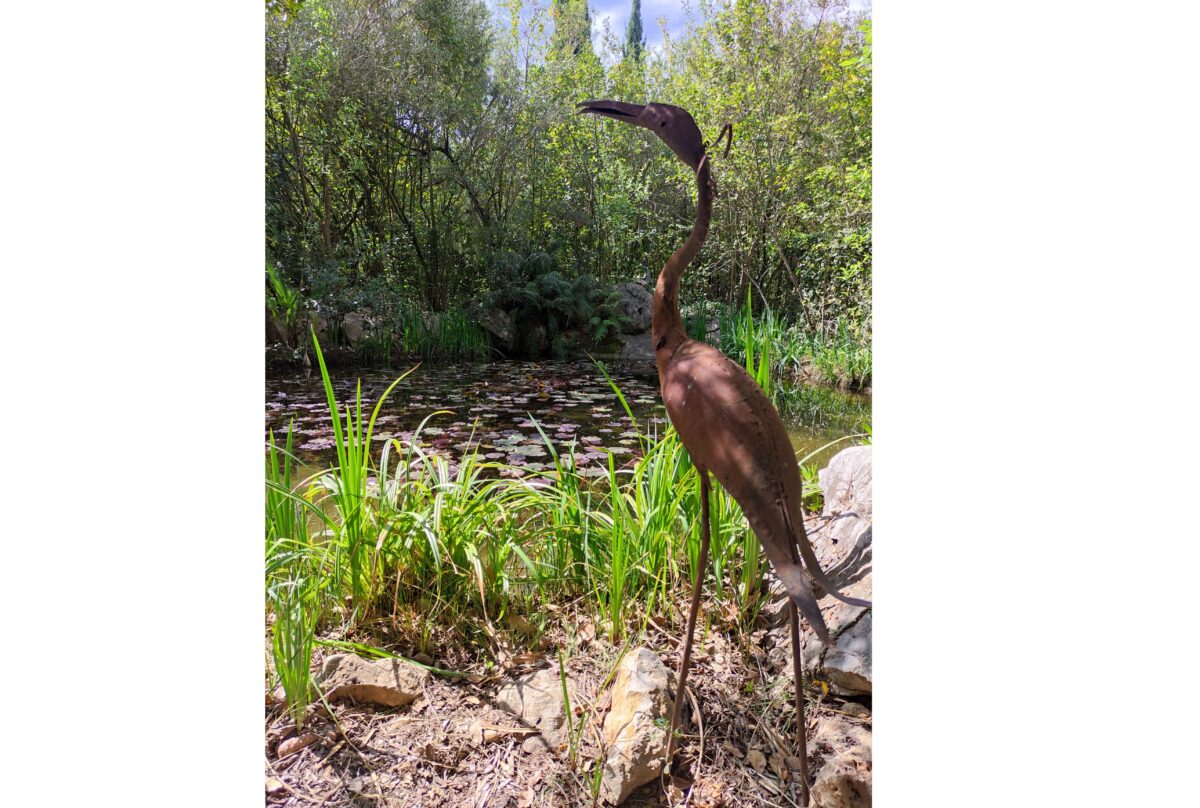
Heron’s pond. / Nicolau Vives Riera
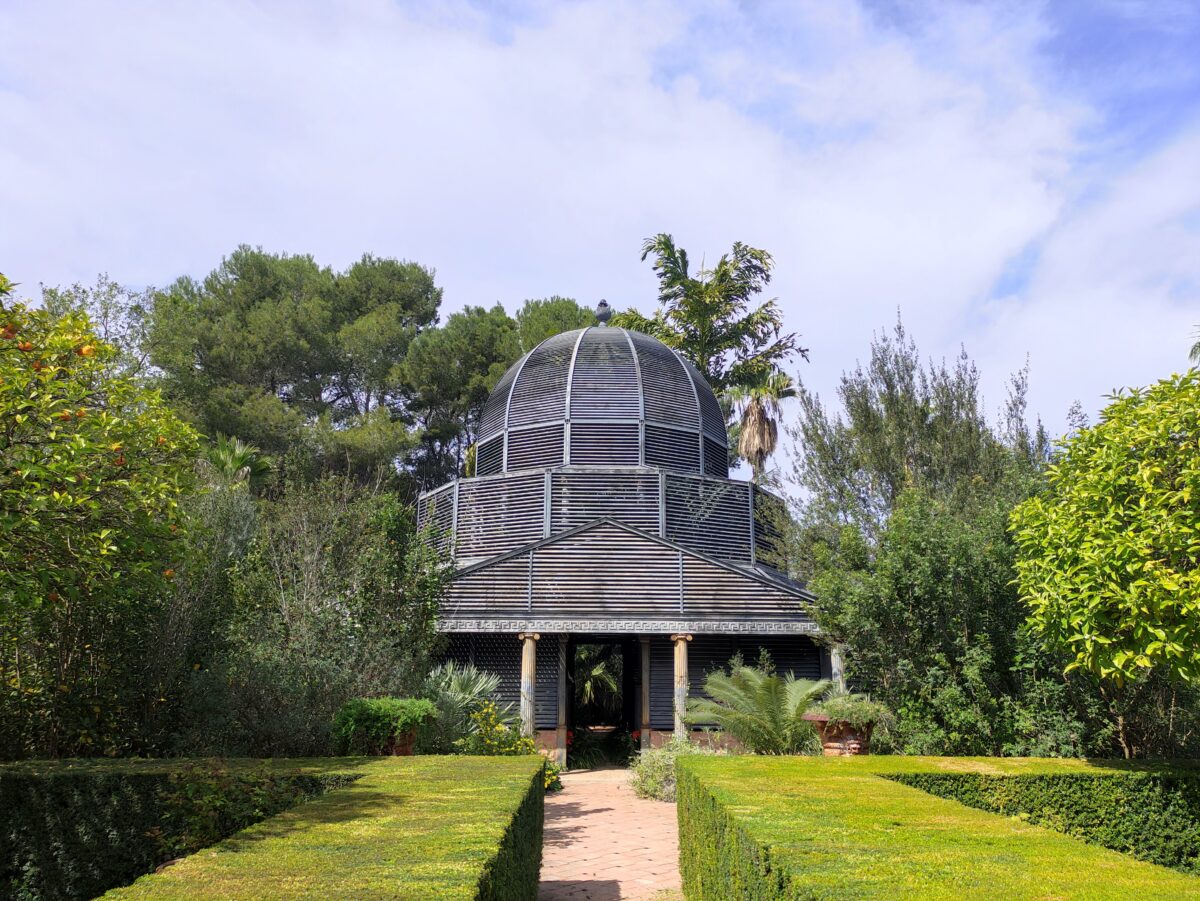
We must make a special mention to the architectural contributions to the complex. The house doesn’t have a visitable interior, but it is a beautiful edification of neoclassical style with the facade covered in Virginia creeper (Phartenocissus tricuspidata) which, in autumn, changes the color of its leaves to an attractive dark red. For its part, the umbracle was a common construction in the Mediterranean Renaissance garden and the one in the Albarda is one of the most popular elements for its design and volumetry, providing shade and humidity to those species that need a more tropical environment, like palm trees or ferns. It is an impressive iron structure. As an anecdote, the writer of this article worked in the garden for a while on vacation from university studies and still remembers the planting of the palm trees inside.
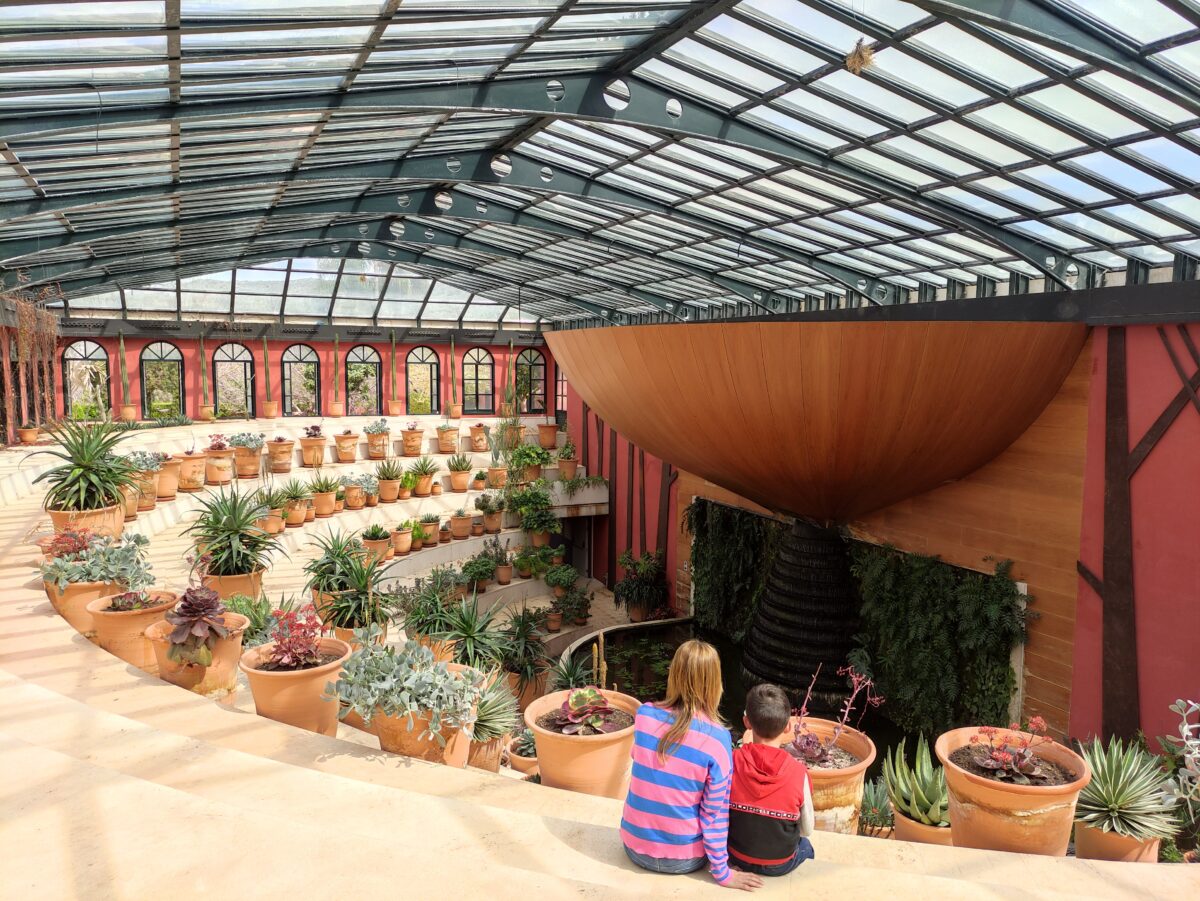
The amphitheater, curiously, is not for people, but for plants. This edification is perhaps one of the most outstanding constructions of architectural ensemble of the garden. It has the function of a greenhouse, full of pots with diverse plants, simulating the spectators of a theatrical performance.
The Albarda, the guarantee of a complete visit
The visit to the Albarda is a gift for the senses, and for all those who love gardening and botany, but it also offers all kinds of educational and cultural activities that enrich its agenda, such as: classical music concerts, environmental education courses, workshops, guided tours and other activities, like Christmas markets or wonderful experiences such as an Escape Garden.
This landscape gem has recently been included in the book published in Canada named “Las 150 plus beaux jardines lleva monde”, which means, in the list of the 150 most beautiful gardens in the world determined by Ulysse. This is a group of experts who travel through the gardens of every continent of the world, selecting Pedreguer’s garden in the European continent. Previously, this green space was awarded for its natural and landscape quality with the Magister de Paisajismo prize in 2002, given by the Universitat Politècnica de València.
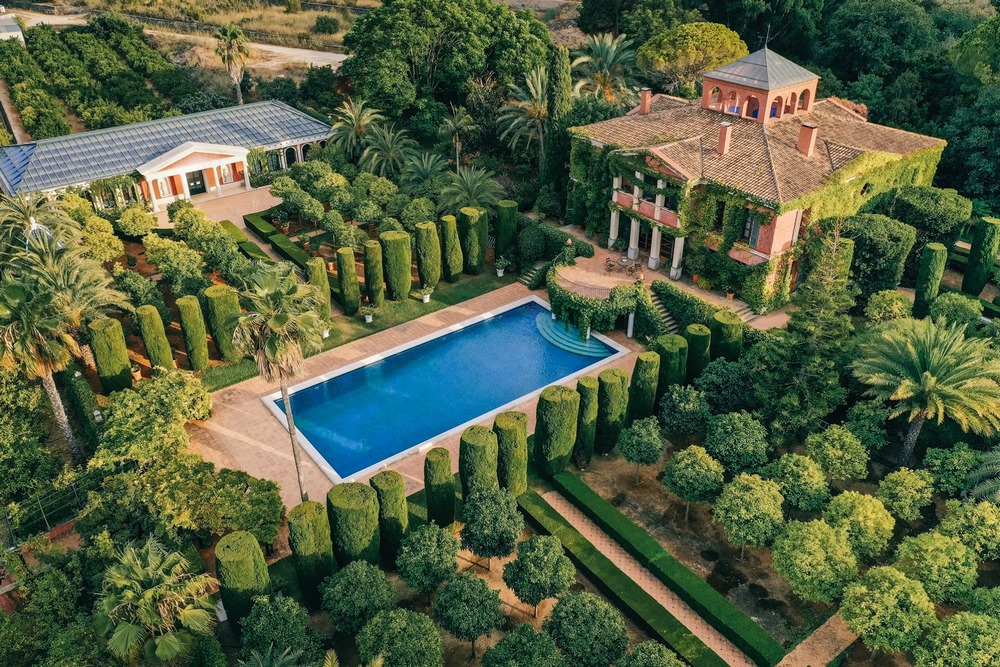
Nowadays, the Albarda is one of the icons of natural patronage in our country. We encourage you to visit, if you haven’t done it yet, the garden in each of the seasons of the year. This way, you’ll be able to discover the different colors of the blossoming of each plant species present in this green space.
Useful resources
Hours: The garden is open every day of the year from 10 am to 2 pm. In summer, from June 15 to September 15, it is also open in the afternoons (from 6 pm to 9 pm). You don’t need previous reservation.
Location: Carrer Baix Vinalopó, 8 – Pedreguer (03750) Alicante
Recommendations: In summer, due to the increase of mosquitoes in humid areas, it is recommended to use repellent creams or, directly, long sleeves.
Places to eat: In Pedreguer, we can make a reservation in the Bar Rey Jaime I, in the Restaurante Ausiàs or in the Taberna Antigua. In the town of Jesús Pobre, we can try in La Tarea, Bar Pedro, Bar Rosita or the Restaurante Lo Sequer.
Where to hire the escape garden
Other places to visit:
We can use the visit to the Albarda to see other interesting places that are nearby like the Hort de l’Alè or the Castell de l’Ocaive, all of them in Pedreguer.
Bibliografia
Garden’s official website
COSTA P., BALLESTER T., GARCIA, P. Pedreguer, memòria d’un poble. Ajuntament de Pedreguer (2009)
GUTIÉRREZ PULIDO, D. Un paseo histórico por el Jardín de l’Albarda. Xàbia al Dia (2020).
The work of Cento Yuste a l’Albarda
Audiovisuals about the Garden
The pianist and composer Fabián Dos Ríos puts soundtrack to a wonderful audiovisual with aerial images in order to spread the botanical richness of the Albarda Garden. You can see it in this article.
El Escarabajo Verde, RTVE
 External Colaborator