









To get a good view of El hondo you must come to the south
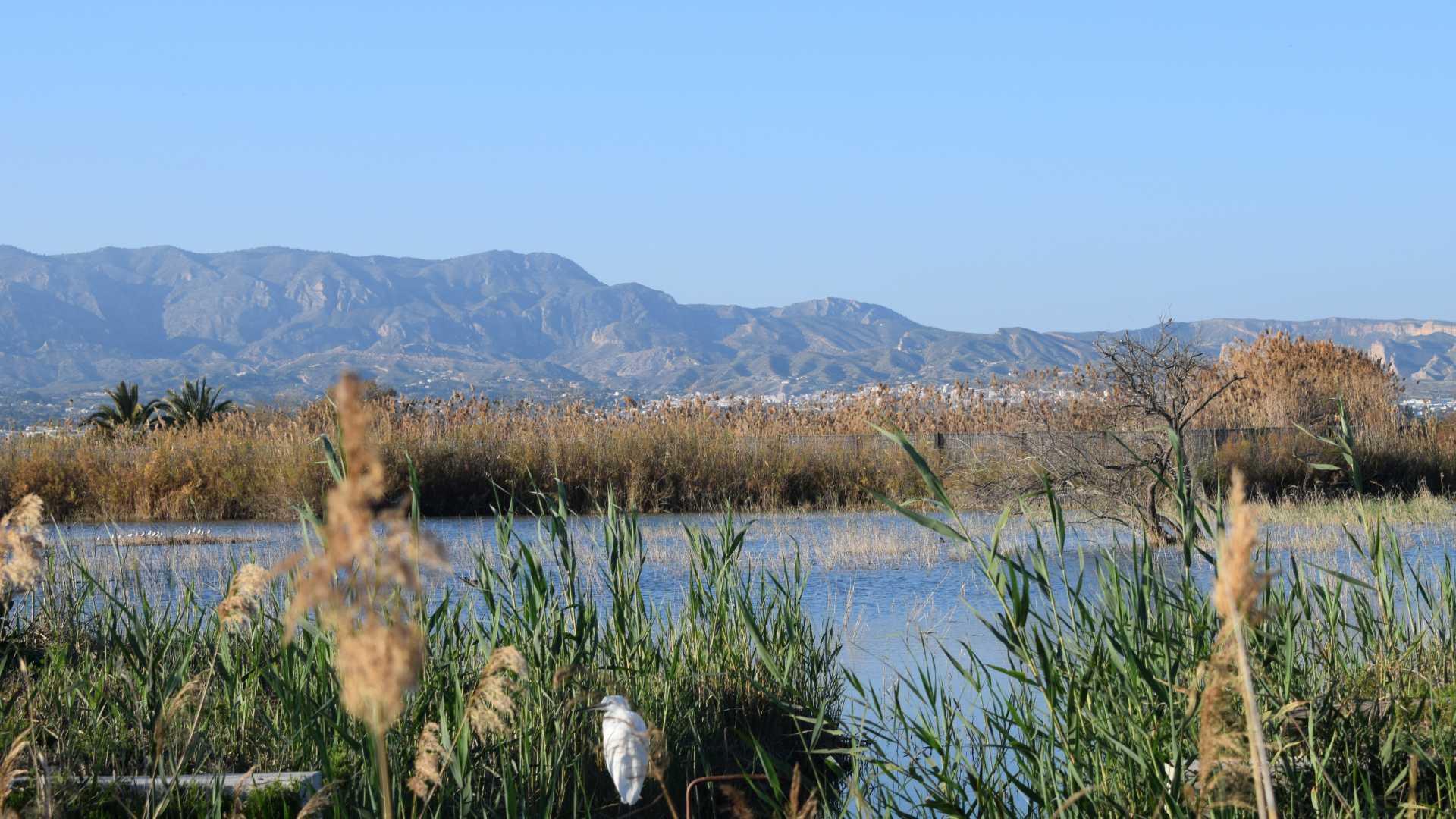
This week in espores we dive into the story of a unique ecosystem emerged from the drying and later flooding of an old lagoon: the Natural Park of El Hondo, located between the municipalities of Crevillente and Elche. This natural treasure, the result of transformations throughout history, holds a diversity of flora and fauna linked to the salinity and concentration of nutrients in the water. We invite you to go on a journey through nature and explore this natural treasure in constant change!
In the changing world in which we live today, people, the economy and nature are experiencing transformations by leaps and bounds. In this uncontrolled advance we often lose sight, as a species, of our connection with nature. Everything, artificial or wild, is nature. In some places of special relevance, these changes can be turning points for the environment, challenges that we have to face in this century. For this reason, and in order to protect important cultural, economic and natural areas, protected areas such as micro-reserves (on the initiative of the Valencian Community), natural parks or national parks were established. Today, we are going to travel to the south of the Community to enter one of the most important wetlands in use in our territory.
The Natural Park of El Hondo, located between the municipalities of Crevillente and Elche (Alicante), has its origin in the drying, and recent flooding, of an old lagoon created by the mouth of the Vinalopó River. During the Middle Ages this marshy zone was drained for the cultivation of different fruit trees that supplied the prolific region of Bajo Vinalopó. More recently, in the early 20th century, the construction of two reservoirs for the management and distribution of water for irrigation led to the flooding of the land creating what is now known as El Hondo.
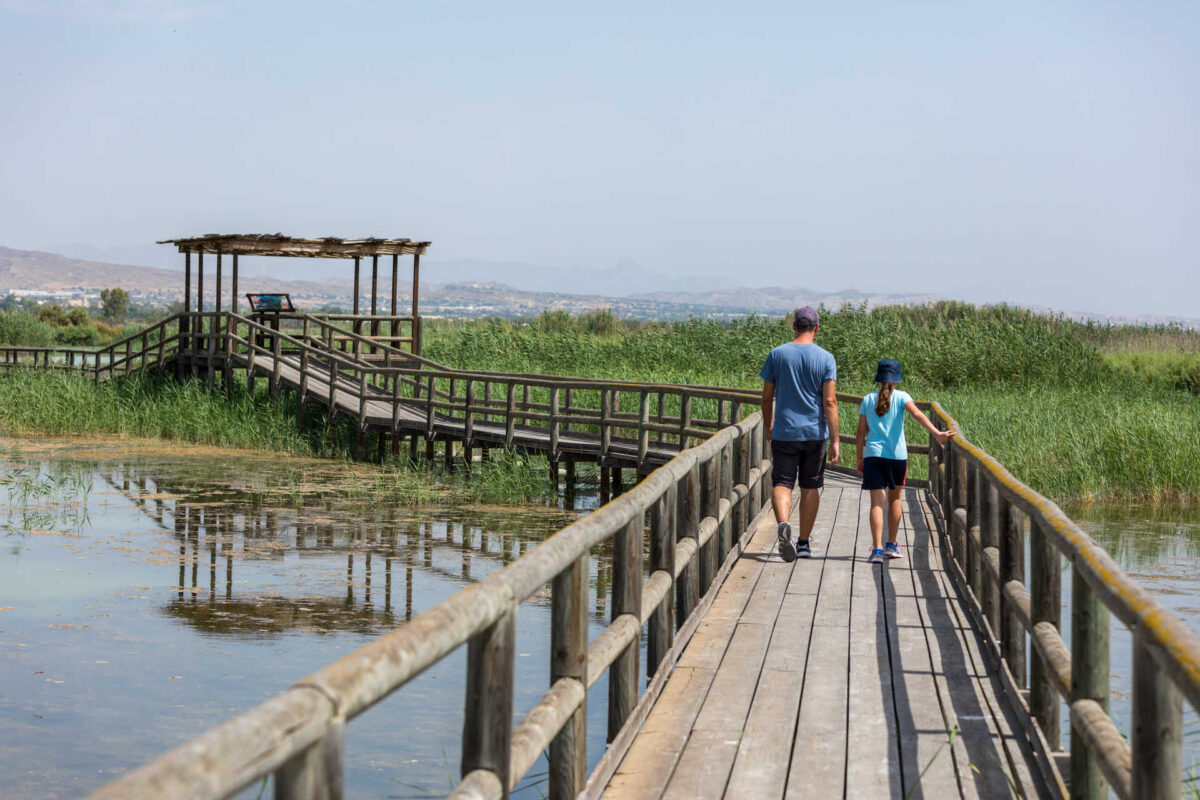
In a living and unique environment like this one, we can find plants that would not otherwise be where they are. The vegetation of the N. P. depends on two factors related to water: salinity and nutrient concentration (degree of eutrophication), as well as the park’s own flooding regime. The terrain that gives rise to the natural space is rather homogenous, with few geological and substrate differences between the different environments.
The reservoirs create the main ecosystem of the park, with relatively freshwater (between 3.8-6 g/l of salt concentration) and a high degree of eutrophy (Viñals et al., 2001). Some nutrients, like nitrates, can reach concentrations 10 times higher than in other ponds, which causes a high proliferation of green seaweed, cyanobacteria and other microorganisms typical of eutrophic waters. These properties make submerged vegetation scarce, dominated by reeds (Phragmites australis) that surround and colonize shallow waters. In some places the cane (Arundo donax) accompanies, but does not replace, the reed, generating large blocks of heliophilous vegetation.
Tangled among the stems of reeds and cane, it is common to find the Cynanchum acutum which, with its white flowers, sprinkles the vegetation borders of the reservoirs with color. Among the tall stems of these plants and the vines that stitch them together, we can find a remarkable population of an unusual form of the tiger butterfly Danaus chrysippus alcippus, a butterfly whose food plant is the Cynanchum acutum. This predominantly white-colored form, as opposed to the common orange, is restricted to North and West Africa and, although its presence in the peninsula is not new, El Hondo stands out for its abundant population (Marco and Aldeguer, 2015).
In shallower areas of the borders of the main lagoons, west and east, the reeds alternate with formations of sedges (Bolboschornus maritimus or Schoenoplectus litoralis) or rushes (Juncus acutus) and young groves of tamarisk (Tamnarix boveana and Tamarix canariensis).

The peripherical ponds, formed by rare waters, are usually more saline (up to 10 g/l) and, in general, of better quality (Viñals et al., 2001). On the mainland, the reeds give way to halophilic bushes, typical salt marsh formations, which include interesting species like: Halocnemum strobilaceum, Halogeton sativus, Suaeda maritima, Sarcocornia fruticosa, Arthrocnemum macrostachyum or Salicornia ramosissima.
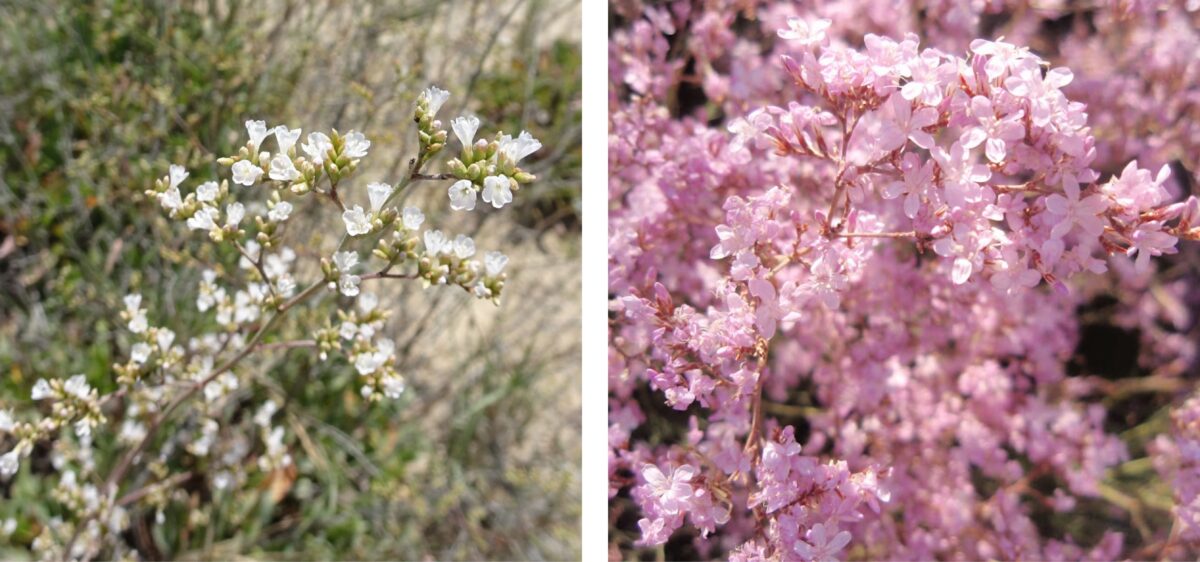
Of special relevance are the Sempervivum, halophilic plants of very high value that belong to the Limonium gender such as L. santapolense, L. delicatulum, L. caesium, L. cossonianum o L. furfuraceum. In general, these communities are of great plant interest due to their endemic character in the southeastern peninsular. As a consequence, the natural park of El Hondo has four flora micro-reserves: El Codo, El Hondo – Charca sur, El Hondo – El derramador and El Hondo – Los rincones, areas destined to the conservation and recovery of rare or threatened flora.
Surrounding the interpretation center and in other specific ponds in the park where the quality of the water is higher and both salinity and the degree of eutrophication are lower, there is a wider variety of aquatic macrophytes. Plants such as Lemna gibba, Potamogeton pectinatus, Najas marina or Ruppia maritima accompany seaweeds like Ulva intestinalis or Chara canescens completing a scarce diversity, but of great ecological value (Servicio de la vida silvestre, 2018).
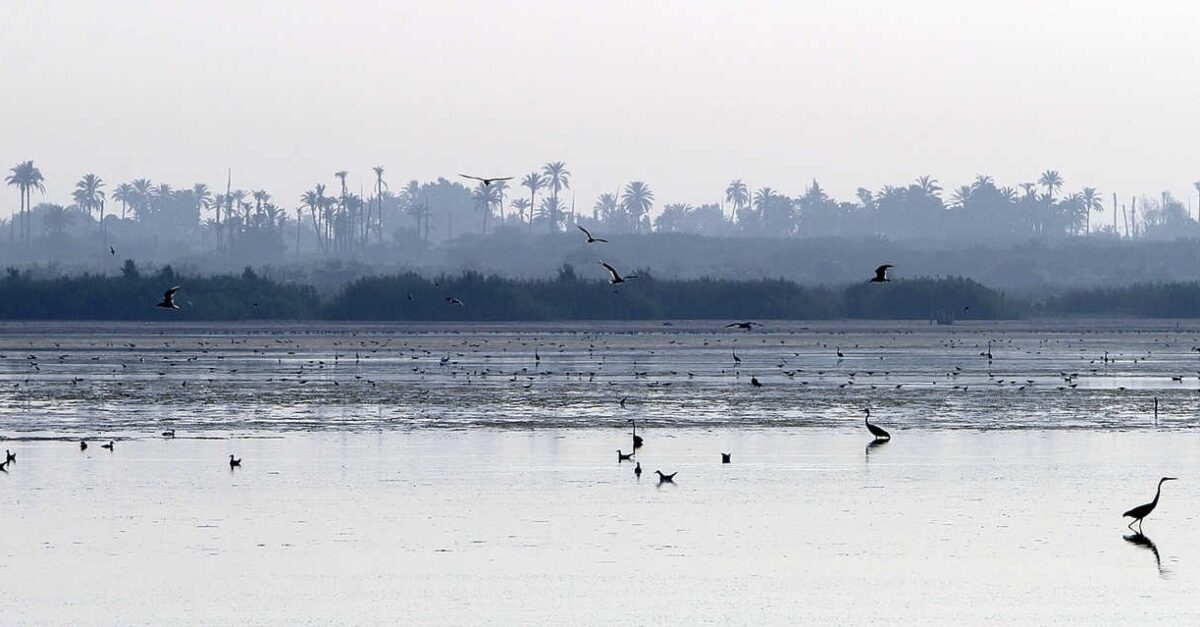
In general, the phytoplankton community of El Hondo Natural Park is represented by a relative variety of groups where diatoms stand out. Other groups like dinoflagellates, cryptophyceae or cyanophyceae complete the first step of the trophic chain. At the same time, zooplankton, a fundamental part of the diet of many birds, such as flamingos, is dominated by rotifers, although copepods, cladocerans like Daphnia pulex, ostracods or amphipods, among others, have also been detected, all of them euryhaline species typical of the Mediterranean coastal lagoons (Viñals et al., 2001).
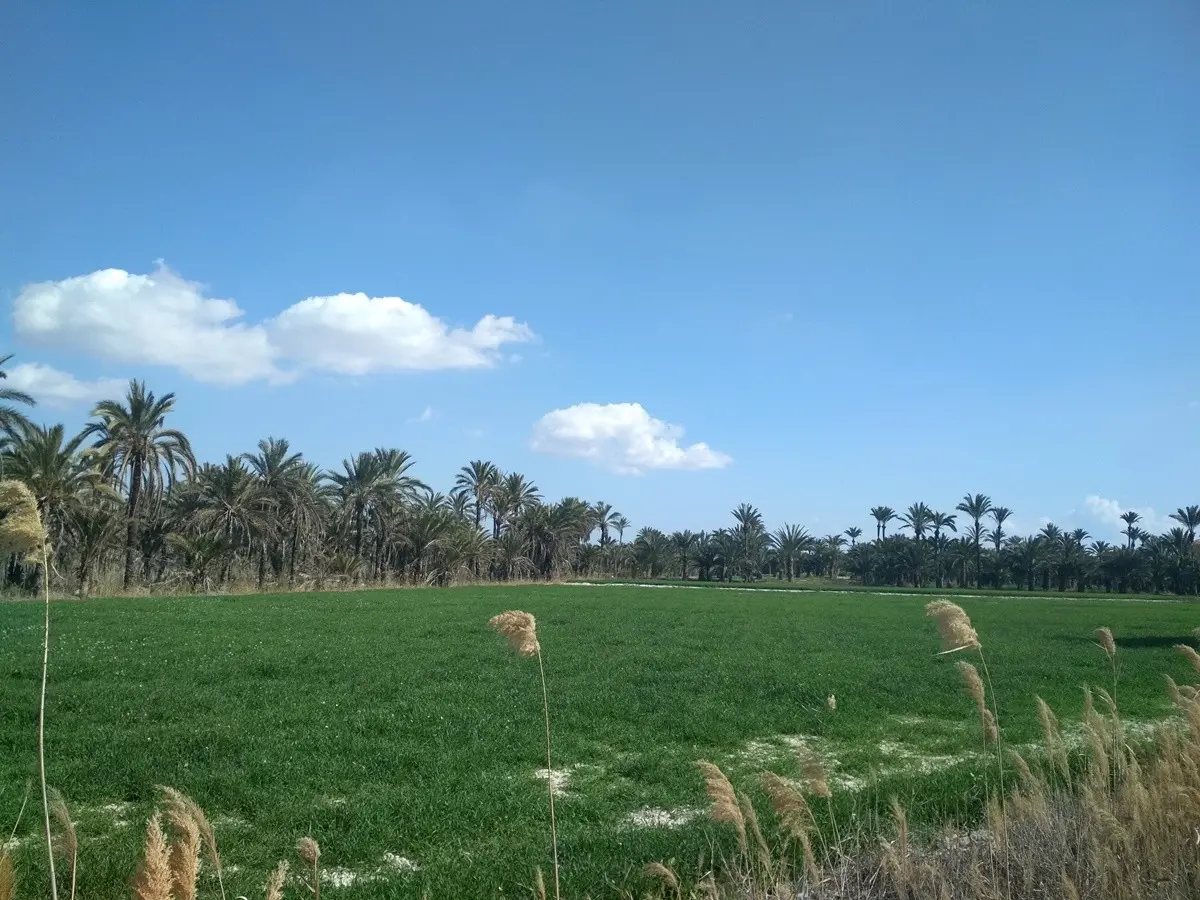
Finally, in some of the drained lands on the periphery, it is still possible to observe different crops, both fruit trees or tree species (pomegranate) and herbaceous (alfalfa). Sporadically, date palms (Phoenix dactylifera) can be seen in the park here and there, vestiges of a past where the cultivation of dates was more frequent. Moreover, as a consequence of the management of the wetland in the past, a row of eucalyptus trees (Eucalyptus globulus) planted in the second half of the 20th century borders the main canal crossing the park longitudinally (separating west from east) and providing tree support for the numerous birds that live in the natural park of El Hondo.
As a complement, throughout the stay in the natural park it is possible to contemplate several plants linked to different environments such as Mesembryanthemum crystallinum, Plantago crassifolia or Apium nodiflorum, as well as the visit, inside the interpretation center, of a small plant area called “El saladar” that sometimes makes the botanical garden represent some examples of the typical flora of these environments.
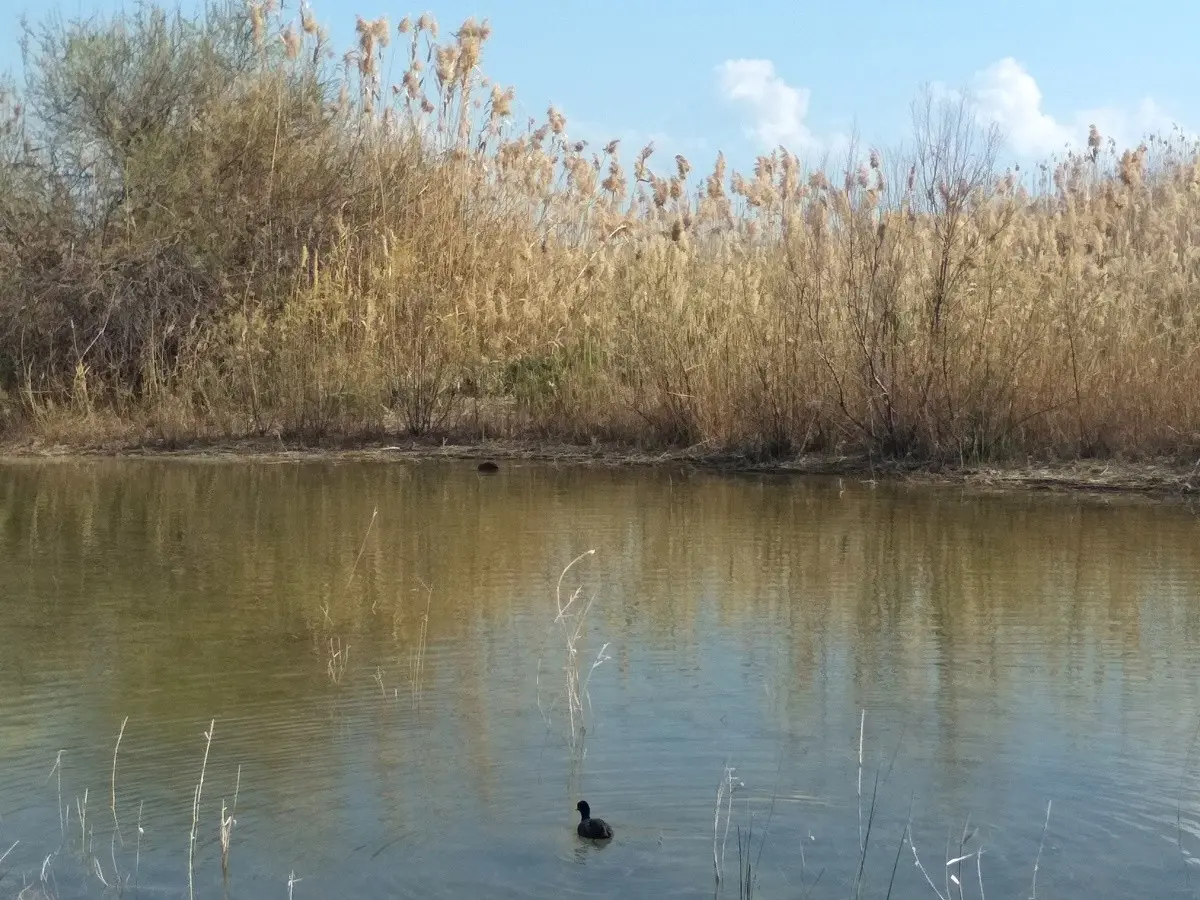
It is possible that the little journey through the letters, plants and animal species and picturesque descriptions have not been enough to portray this rich, changing and lively area of Alicante. The annual march of the seasons modifies the panorama completely. In autumn and winter, when there is more water, sheets of transparent glass reflect the cold blue of the sky; in spring, the blossoming of many species and the bustle of the birds and insects fills everything; in summer, under the burning sun, a lot of areas dry up leaving only reeds and mud. Therefore, we invite you to come to the south, enjoy the culture and gastronomy of the Bajo Vinalopó at any time of the year and share with your friends and family the flora, the fauna and the fantastic views of El Hondo.
Bibliografia
Marco, J. y Aldeguer, O. (2015) Detectados en El Hondo ejemplares de una subespecie de la mariposa tigre. [Online]: https://ahsa.org.es/mariposas/detectada-en-el-hondo-ejemplares-de-una-subespecie-de-la-mariposa-tigre. [Accedido]: 28/11/2023.
Servicio de vida silvestre (2018). Estudio de los macrófitos acuáticos en el PN El Hondo. Conselleria d'Agricultura, Medi Ambient, Canvi Climàtic i Desenvolupament rural. Generalitat Valenciana.
Viñals, M.J., Colom, W., Rodrigo, T., Dasi, M.J., Armengol, J., Oltra, R. y Miracle, R. (2001) Rasgos característicos de un humedal mediterráneo artificializado y su problemática ambiental: El Hondo de Elche (Alicante, España). Humedales Mediterráneos, 1 147-154.

 External Colaborator